VIRGINIA COP OF 15 YEARS PLAYED DOLLS WITH SCARED KIDS
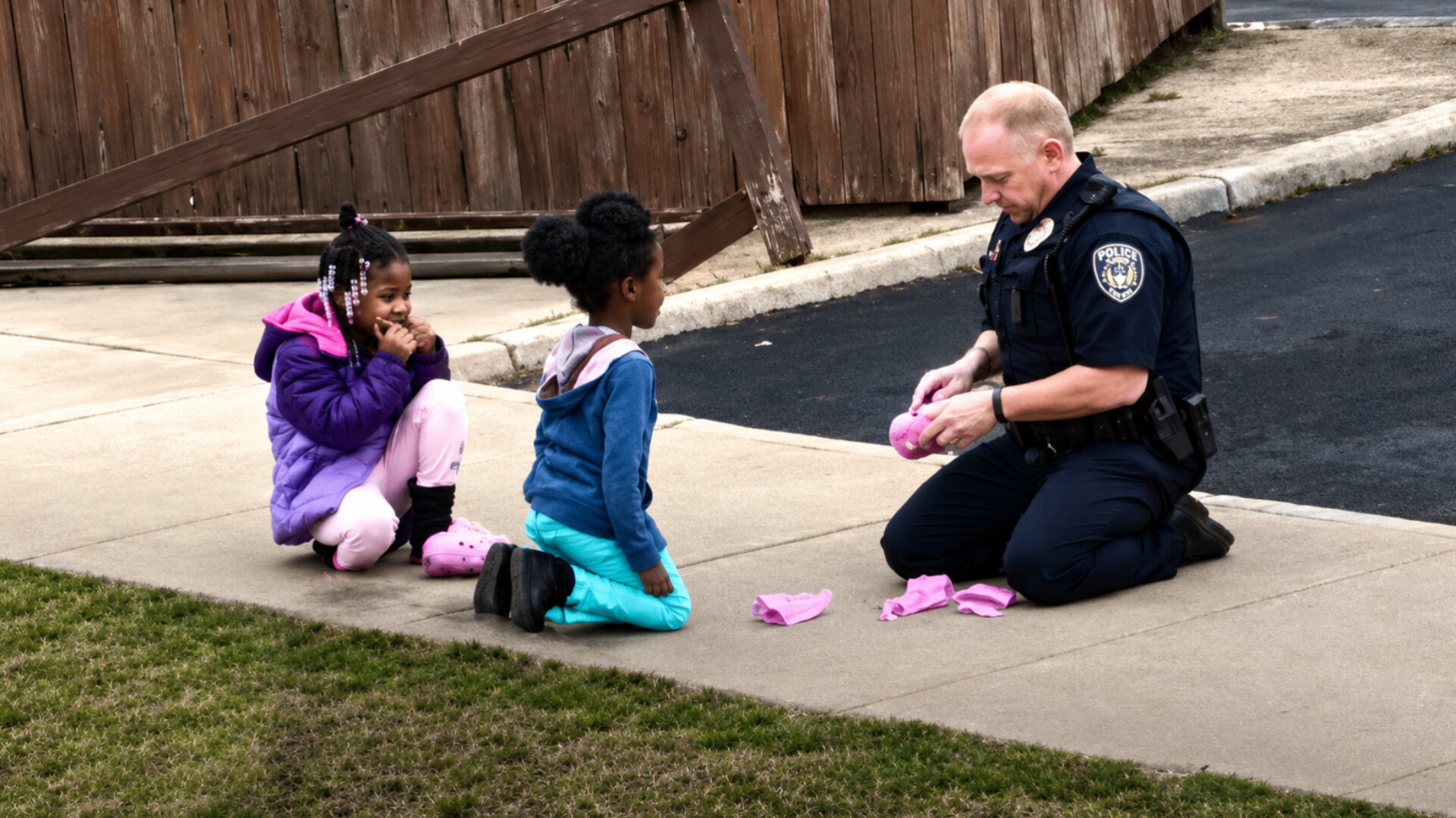
A Virginia police officer wrapped up a gas-leak call, then lay on the sidewalk to play dolls with kids who were outside.
Cpl. C.B. Fleming of the South Hill Police Department was sent to the Mecklenburg Manor apartment complex in South Hill on February 14, 2019, after a report of a suspected gas leak. He had been on the force for 15 years.
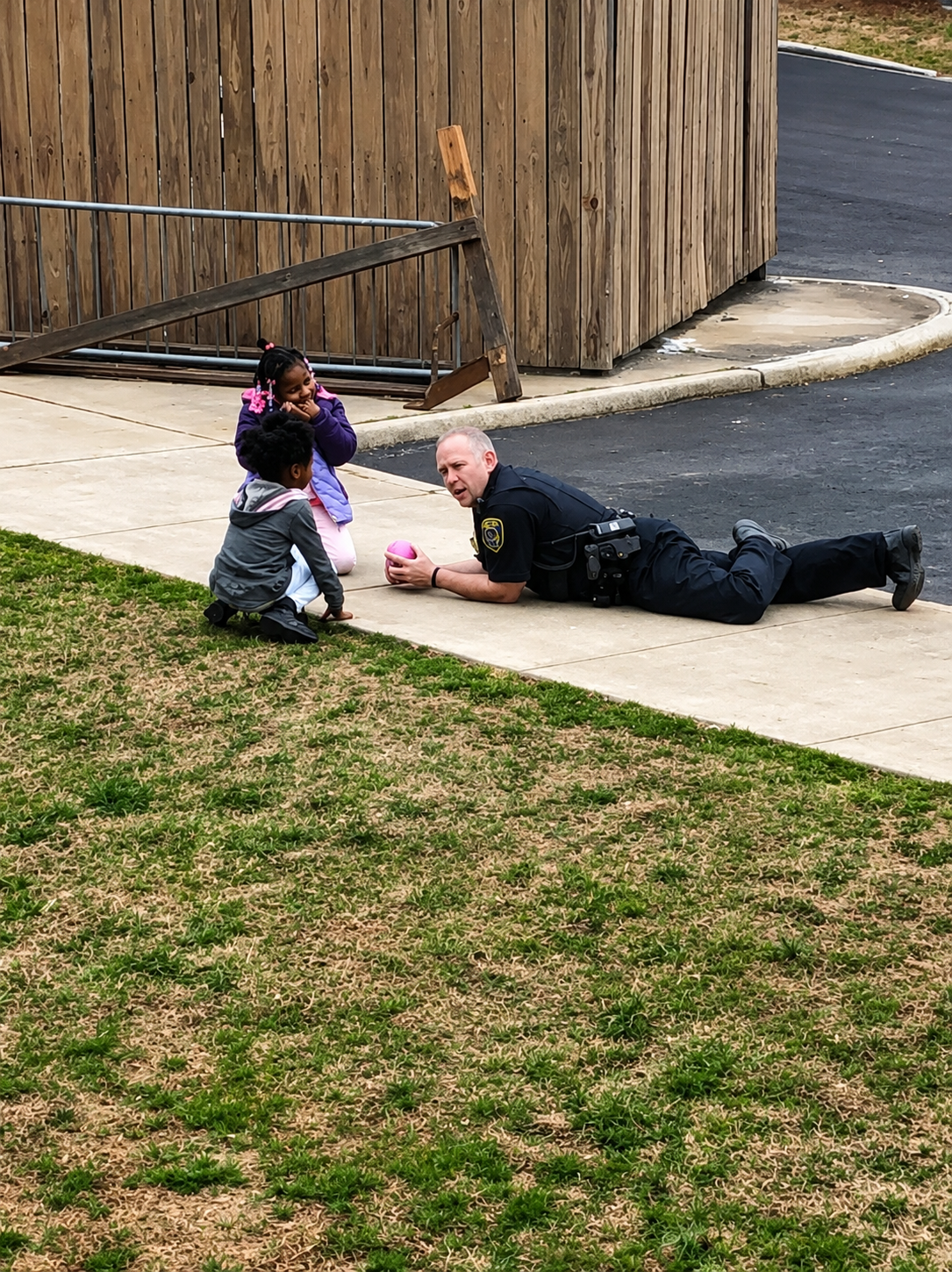
The scare turned out to be a false alarm, and the area was considered safe. Fleming stayed anyway.
Chief Stuart Bowen told ABC News that Fleming “saw an opportunity to go out and speak to these kids and show them the positive side of a police officer.”
Dolls, sidewalk chalk and a “Bat-Mobile”
Fleming played with dolls and drew with sidewalk chalk. Photos show him stretched out on his stomach on the pavement, right at kid level.
Bowen said the message to the children was simple: “no reason to be afraid.”
WDBJ7 reported that the video shows Fleming singing music from Moana and showing the kids his police car, which he called the “Bat-Mobile.”
Bowen said it was not a one-off. “This isn’t the first time he’s done something like this,” he said.
As for why police were there at all, Bowen said officers are dispatched to fire calls to gather information for the volunteer fire department.
The mom behind the camera
Iesha Roper-Boswell recorded the scene and posted the video on Facebook. Police1 described her as a 28-year-old mother of one of the children.
She told WTVR the kids were afraid of police before Fleming interacted with them.
“I was telling him that my daughter, my niece, and some of the other children here were afraid of cops,” she said.
CNN reported that she started filming because her niece did not cry. “It was amazing that my niece didn’t break out into tears,” Roper-Boswell said.
Her praise for Fleming was blunt. “He’s awesome. That’s the only word you can really use to describe C.B.,” she told WTVR. “It’s just amazing, the bond he has with the children.”
Her Facebook post described the false alarm turning into a play session and thanked Fleming for taking the time to play with the children, KRIS-TV reported.
Fleming’s take
Fleming told WTVR that connecting with kids was something he had always tried to do.
“When I got into this job, I knew there was something different, other than just writing tickets and being the bad person all the time,” he said.
Police1 reported that the video had more than 10,000 views. Police Magazine separately reported more than 45,000 views within a few days.