BASS OPENED 208-BED TINY HOME VILLAGE IN SUN VALLEY
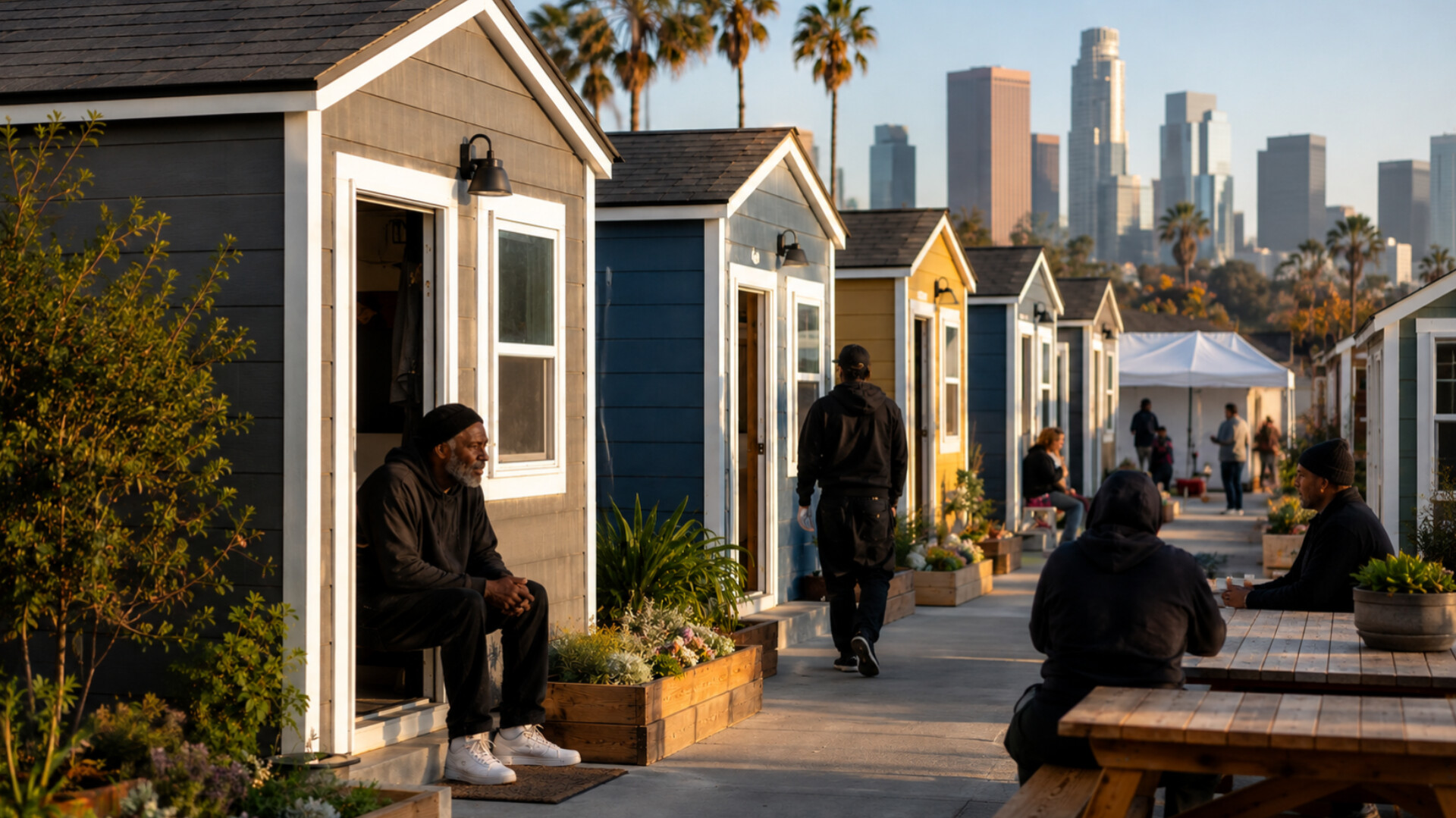
Los Angeles cut the ribbon on the Olinda Tiny Homes Village, a 208-bed site for unhoused residents at a Sun Valley Metrolink station.
Mayor Karen Bass, Councilwoman Imelda Padilla and members of nonprofit Hope the Mission showed off the site at a news conference on August 10, 2026, the day the village debuted, NBC Los Angeles reported.
Bass framed the village as a money-saver and a way out of motel rooms.
“Leveraging tiny homes as interim housing is a key part of our strategy to reduce the cost of Inside Safe and move away from housing homeless Angelenos in motels as we work to expedite the building of permanent housing across L.A.,” Bass said in a statement.
Padilla said the homes mean more than a roof.
“These tiny homes represent more than shelter; they represent dignity, stability and a real first step toward permanent housing for our unhoused neighbors here in Sun Valley,” she said in a statement.
What residents get
The village is interim, transitional housing meant to help residents move toward stability and permanent housing. City officials said residents will not pay rent.
The city did not provide a specific project cost. Officials said the money came from the state.
Each unit is ADA accessible, the City of Los Angeles said. Inside are a stowaway bunk bed, electrical outlets, heating and air conditioning, interior lighting, shelving and storage.
Services include residential monitoring and security, three meals a day and case management. The city also lists street-outreach support, life-skills assistance and dedicated case managers.
The San Fernando Valley Sun reported that the site has built-in restrooms, community rooms and a dog park.
Hope the Mission is contracted to run operations through LAHSA.
The bigger plan
Bass said the village is part of a broader push to build more than 500 tiny homes across Los Angeles.
“With hundreds of tiny homes now online and hundreds more under construction, we’ll continue implementing innovative, cost-effective solutions to expand our ability to bring people in off the street,” she said in a statement.
The Sun Valley site followed another tiny-home village near the Van Nuys Amtrak/Metrolink station, the Valley Sun reported.
Not everyone in Sun Valley welcomed the project. Opposition had been organized by The Climate Corps Initiative, and a representative called for transparency and accountability over security, sanitation, maintenance and neighborhood conditions.
What happened next
Move-ins were scheduled to begin August 17, 2026, with 25 people moving in per day until the village reached capacity, according to the Valley Sun.
The city published a project page for the village on August 20, 2026. Its October 3, 2026 update lists accessible units, meals, street-outreach support and case management among the services for residents.