DESPITE THE BULLYING FOR HAVING LONG HAIR, 11-YEAR-OLD JACOB MCPEAKE DECIDED TO KEEP LETTING HIS LOCKS GROW TO DONATE THEM TO CHILDREN WITH CANCER
Peer pressure often acts as a suffocating force during the pre-teen years. For many young boys, the desire to fit in outweighs the urge to stand out, especially when that choice invites ridicule. However, the story of a young athlete from Gloucester proves that personal conviction can triumph over playground taunts when the goal is greater than one’s own comfort.
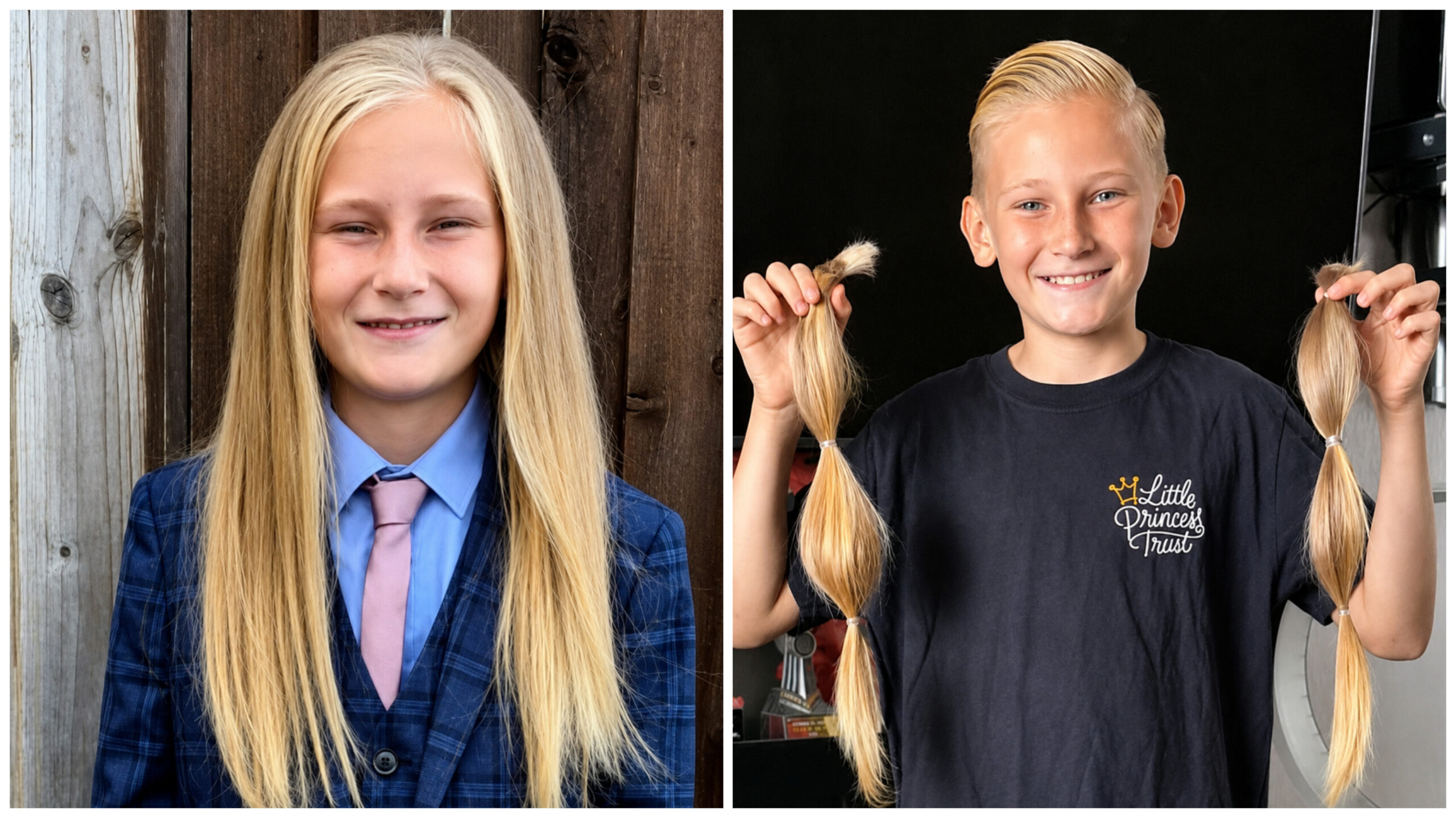
In 2021, eleven-year-old Jacob McPeake embarked on a mission that was deeply personal. Having lost three of his grandparents to cancer, the young rugby player decided to support The Little Princess Trust. His plan was simple but required immense patience: he would grow his hair long enough to be donated for a real-hair wig. While the intent was noble, the daily reality of growing out his locks brought an unexpected challenge in the form of relentless bullying.

As Jacob’s hair reached the significant lengths required for donation, he became a target for teasing. The social friction grew so intense that he considered abandoning the project and cutting his hair early just to escape the negative attention. This is a crossroads many children face, where the emotional toll of being “different” starts to feel heavier than the reward of the charitable act.
The narrative took a turn when professional rugby player Guy Thompson stepped in. Thompson, who has played for high-profile clubs like the Wasps and Leicester Tigers, recognized a kindred spirit in Jacob. In a heartfelt letter of encouragement, Thompson shared that he had also grown his hair long for the exact same charity. He reminded the young boy that having long hair did not diminish his strength as a rugby player or his character as a person. Instead, Thompson framed the act as a display of independence and unselfishness—the very traits that define the best teammates on the field.
This intervention highlights a growing trend in youth sports culture where traditional gender norms regarding appearance are being challenged by high-profile role models. In the world of rugby, a sport often associated with grit and traditional masculinity, Thompson’s support provided Jacob with a “social shield.” It gave him the validation he needed to ignore the critics and finish what he started.
The Little Princess Trust, the organization Jacob supported, has a history rooted in similar personal loss. Founded in 2006 by the parents of Hannah Tarplee, who passed away from a Wilms’ tumour, the charity addresses a specific hardship of childhood cancer: the loss of hair. For many children, a high-quality wig made of real hair provides a sense of normalcy and confidence during an incredibly traumatic time. These wigs are provided free of charge to recipients, but the cost to the charity for sourcing and manufacturing is significant.

Jacob eventually reached his goal, sitting for the big chop in late July of that year. He didn’t just donate a few inches; he contributed a massive 18 inches of hair. To put that in perspective, the charity generally requires at least 7 to 12 inches for most wigs, but longer donations are highly prized for creating styles that allow children more variety.
Beyond the physical donation, Jacob’s fundraising efforts were staggering. He managed to raise over £1,230. Considering that it costs the charity roughly £550 to provide a single wig to a child, Jacob’s contribution effectively funded two full wigs in addition to providing the raw material for another. This level of impact is rare for a primary school student and speaks to the community support he rallied despite the initial bullying.
Public reaction to stories like Jacob’s often sparks a wider conversation about the “rules” of childhood. On social media and parenting forums, readers frequently praise these young donors for their “thick skins.” Many commenters note that children like Jacob are essentially undergoing a crash course in integrity—learning to value their internal compass over the external noise of their peers.
This story serves as a reminder that the impact of bullying can be mitigated by the presence of a strong mentor or an adult who validates the child’s path. Guy Thompson’s letter didn’t just help Jacob grow his hair; it helped him grow his resilience. As the young rugby player returns to the pitch with shorter hair and a lighter head, he carries the weight of a significant achievement that will change the lives of other children facing their own battles with illness.