TEEN’S $350 APARTMENT WAS A RETIREMENT COMMUNITY
A teen who rented a $350 apartment sight unseen learned she had moved into a retirement community.
In April 2021, Madison Kohout, 19, moved from Oklahoma to Piggott, in northeastern Arkansas. She had found a two-bedroom apartment online and moved in without ever seeing it in person, and the rent was $350 a month, Fox News reported.
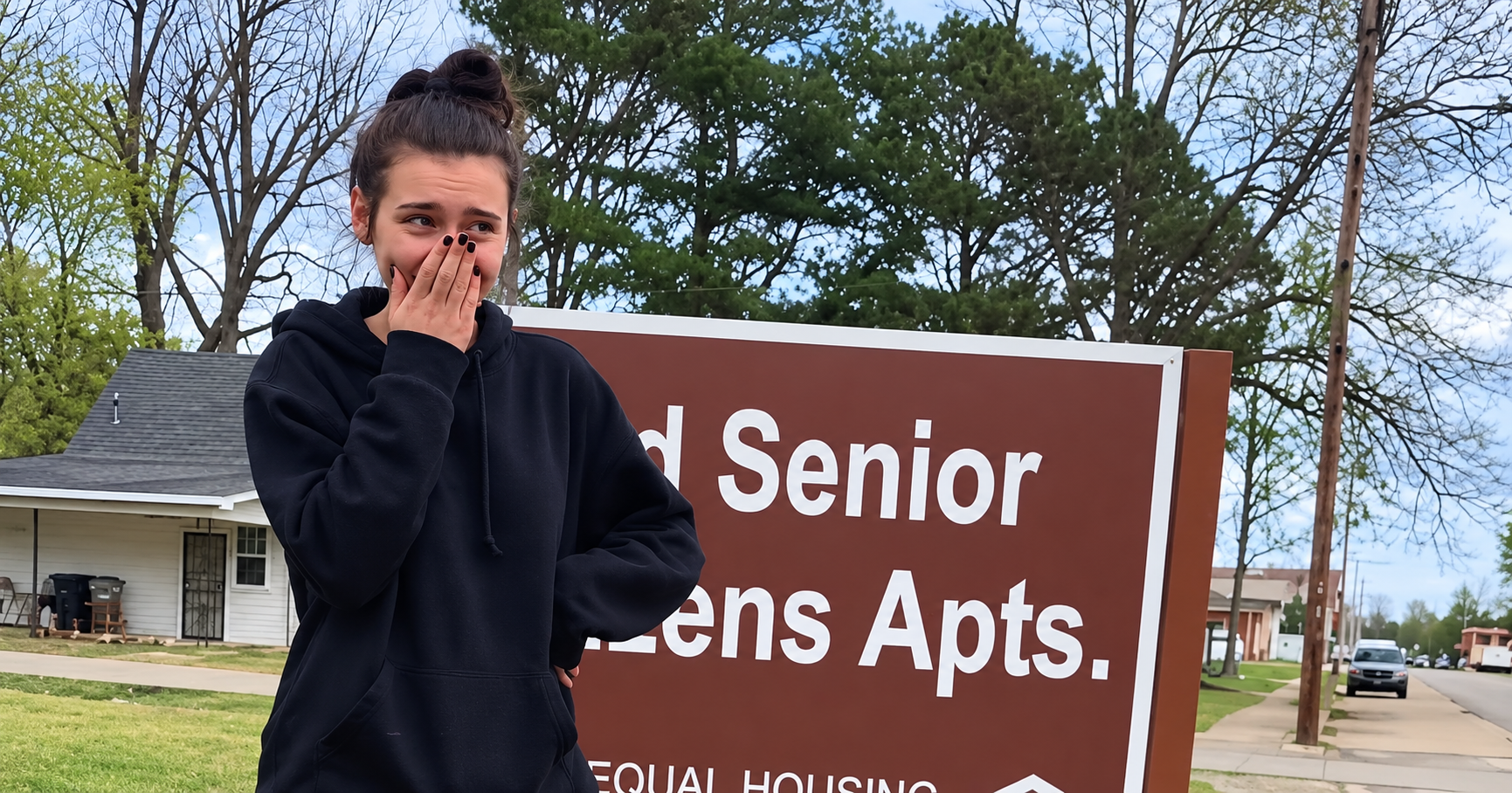
She had lived there for about a week when she noticed a sign identifying the property as senior living. “I was looking around at my surroundings to see what there was I could do here, and I saw the sign that said ‘Senior Living Apartments,’ and I realized I moved myself into a retirement community,” Kohout told The New York Times.
“Once I saw the sign, all the things clicked. I was like, ‘Oh, my goodness, I can’t believe I did this.’” she said.
She had already noticed that her neighbors were much older than she was.
Life with her new neighbors
The Times described the property as a 10-unit complex for older adults.
Kohout worked as a nursing assistant, and she was not shy about her place in the building. “I am the only teenager in sight,” she said.
She also made clear the complex was not off-limits to someone her age. “They are equal opportunity housing, meaning they do not discriminate based on age. However, it is designed for senior citizens, as that is the primary age group residing here,” she said.
Kohout posted videos about the move and her life in the complex on TikTok, and they took off. The New York Post reported the first clip had 3.4 million views.

“Never in my entire life did I think I would be living in a retirement home!” Kohout said.
She wasn’t new to the app. Kohout said she had connected on TikTok over the previous year with Piggott resident Lori Parker, who described herself to her more than 65,000 followers as “a Preacher’s wife, Mom and Nonna.”
The tale spread well beyond TikTok, landing in outlets from the Mirror to the Times.
Kohout said the surprise turned into a comfortable fit. “I have become friends with a lot of my neighbors,” she said.
“I absolutely love my neighbors.”
She also leaned into the age gap. “It has definitely been fun getting to have extra sets of grandparents. I plan on staying for quite a while!” she said.
What happened next
Birds Advice reported that Kohout eventually moved to another apartment complex.