UTAH GIRL, 7, WITH ALOPECIA WORE JEWELS TO CRAZY HAIR DAY
A 7-year-old Utah girl with alopecia showed up to Crazy Hair Day with a scalp covered in jewels, and her classmates mobbed her.
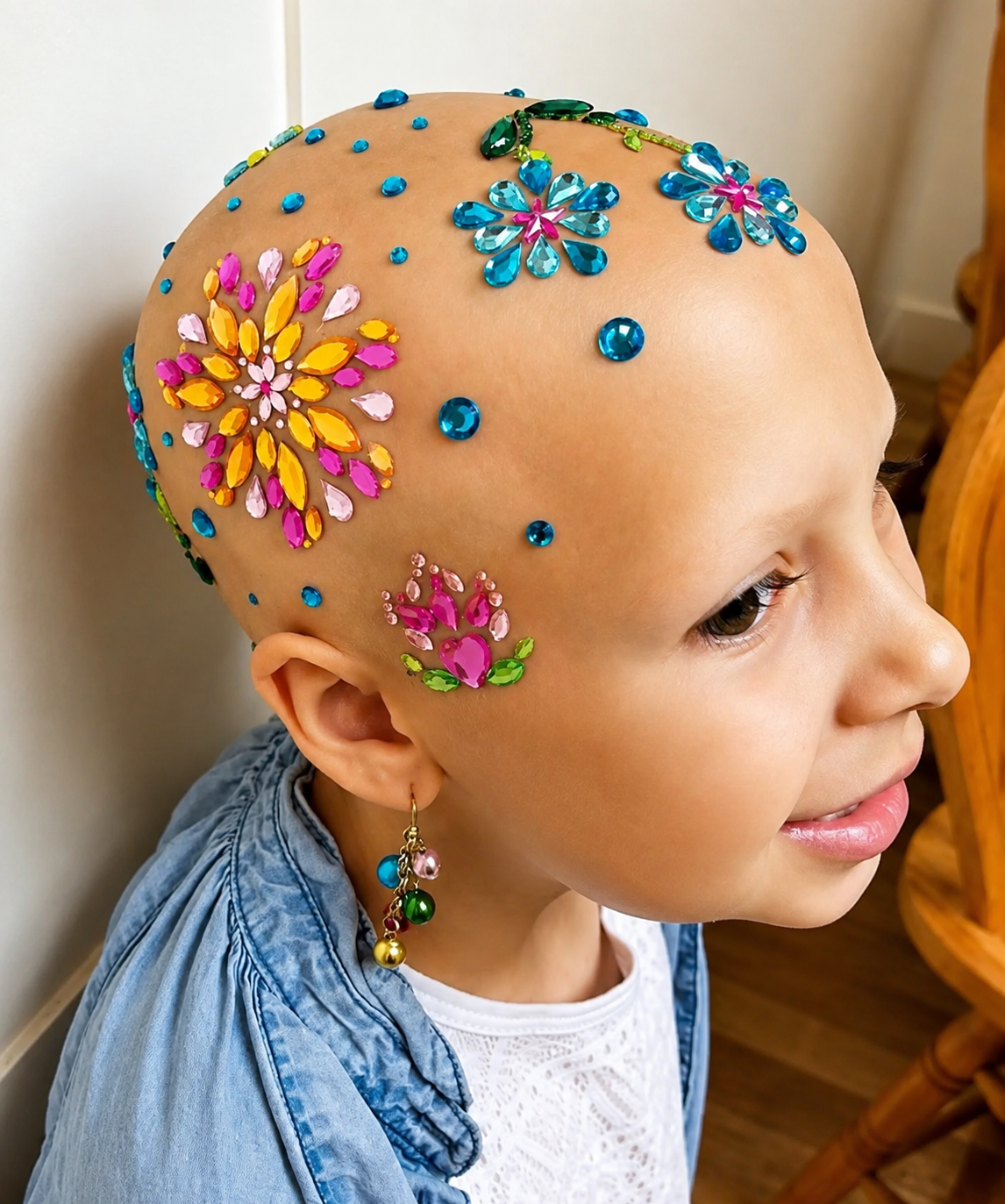
Gianessa Wride, a first grader from Salem, Utah, wore the sparkly look to her school’s Crazy Hair Day in March 2017. Her mom, Daniella Wride, had decorated her bald head with jeweled scrapbook stickers.
Daniella worried the day might leave her daughter feeling excluded, so she went looking for a way to get her involved. “I didn’t want her to feel like an outcast or that she wasn’t like the other kids,” she told WebMD.
How the hair loss started
It began in January 2017. Daniella noticed a bald patch about the size of a quarter while brushing Gianessa’s hair.
Gianessa lost her hair within a month, TODAY reported. By the time she saw a dermatologist, all the hair on her head was gone, along with her eyebrows and lower eyelashes.
She was diagnosed with alopecia areata, an autoimmune condition in which the immune system attacks hair follicles.
Ten minutes of stickers
Daniella built the design in about 10 minutes, TODAY reported. It included flowers and an owl, plus a butterfly, FOX 13 reported.
“They just fit her personality,” Daniella said of the designs.
“She’s so vibrant and full of life, and she loves everything sparkly,” she added.
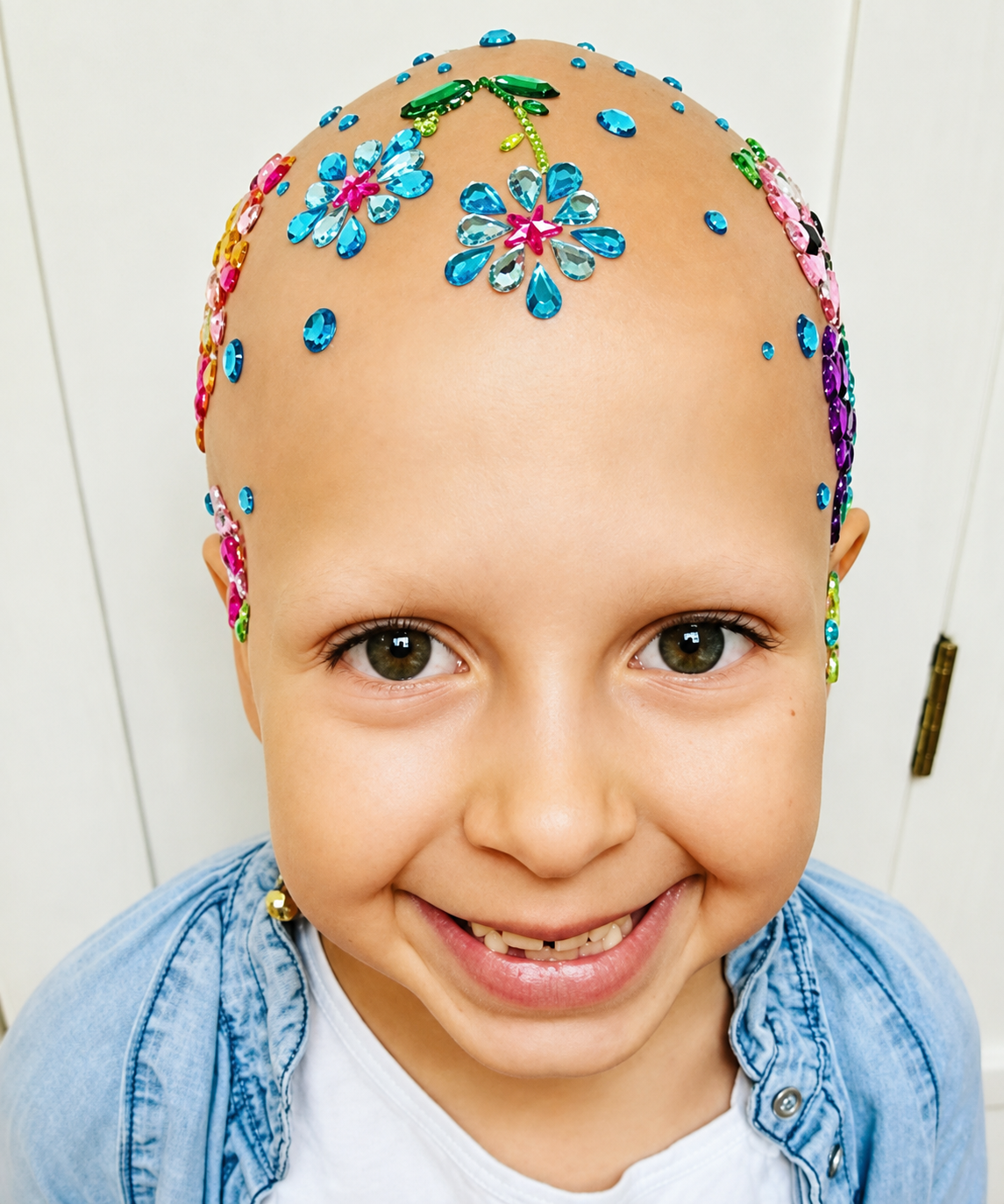
The reveal went over big at school. “People were crowding me,” Gianessa told FOX 13. “Saying, ‘You look cool, how did you do that?'”
The story traveled well beyond Salem, drawing coverage from CBS News Texas and CNN. CNN reported that Gianessa won her school’s Crazy Hair Day contest. WebMD reported she took first place.
What happened next
Daniella also visited Gianessa’s first-grade class to explain alopecia and encourage students to avoid bullying, TODAY reported.
Messages poured in afterward. Daniella told WebMD she heard from people around the world who either have alopecia or know someone who does. TODAY reported that parents sent photos of their own children with the condition.
“I hope this brings a wave of positivity and reminds everyone that beauty comes in many forms, regardless of outward appearances or struggles,” Daniella told TODAY.
Gianessa understood her hair might not come back and kept up with her activities, CNN reported Daniella said. WebMD reported there is no cure for alopecia areata. Topical ointments or steroid injections may help hair grow back, and it can sometimes regrow on its own.
Daniella told FOX 13 that Gianessa was already planning for the next year’s Crazy Hair Day.