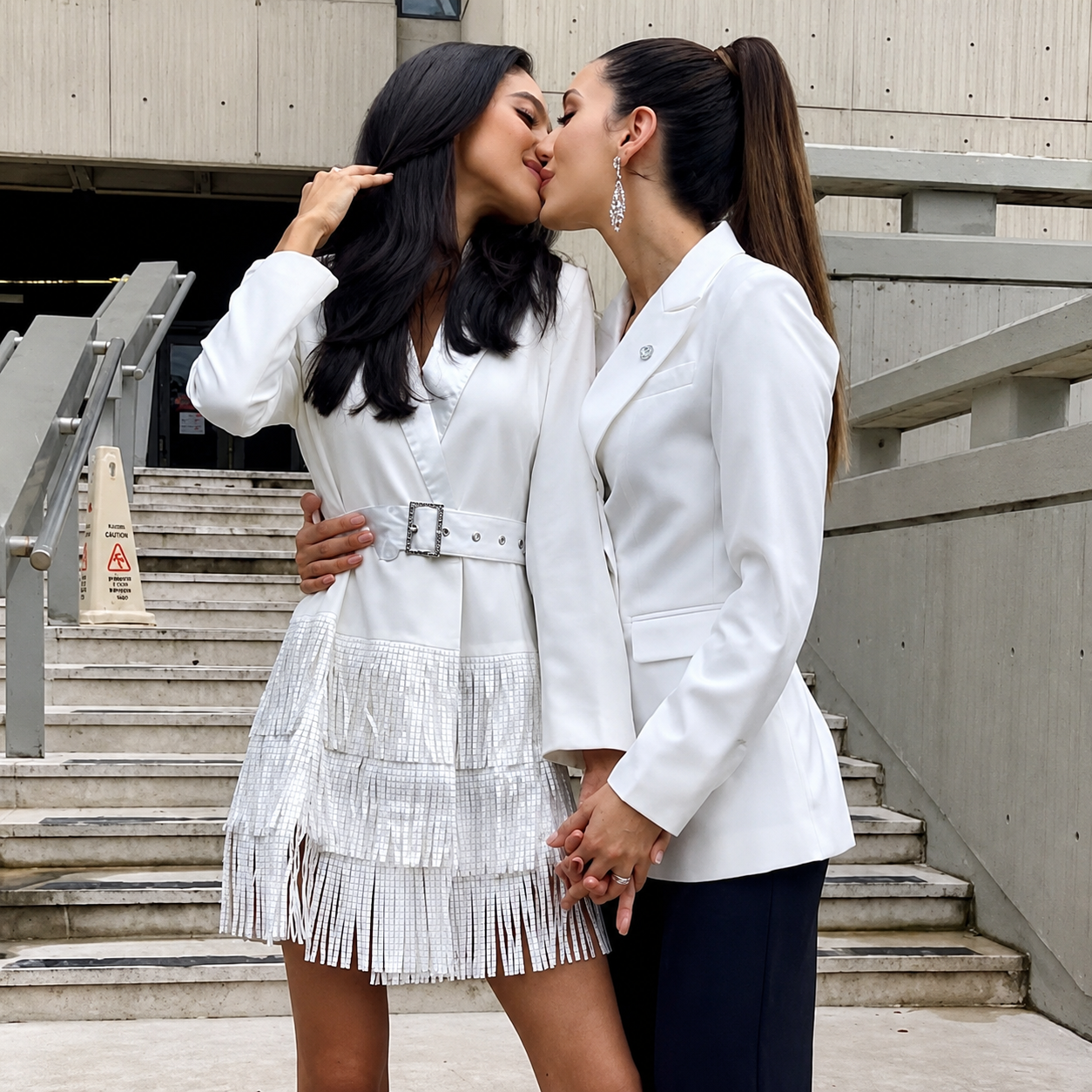
MISS ARGENTINA AND MISS PUERTO RICO GOT MARRIED AFTER FALLING IN LOVE DURING A PAGEANT IN 2020
Beauty pageants usually focus on the fierce competition between nations for a single, glittering crown. We expect tears, high-fashion gowns, and the occasional scripted answer about achieving world peace. We rarely expect the two top competitors to walk away from the stage hand-in-hand as life partners.
This unexpected romantic pivot became reality when Mariana Varela and Fabiola Valentín surprised the internet with a life-changing announcement. Varela, who held the title of Miss Argentina 2020, and Valentín, who reigned as Miss Puerto Rico 2020, revealed they are now officially married. The two women managed to keep a secret for two years that most public figures would find impossible to hide.
The couple first crossed paths during the Miss Grand International competition in Thailand. While they were technically rivals representing their respective home countries, something deeper than professional respect formed behind the scenes. Throughout the 2020 pageant cycle, fans noticed the two spent a significant amount of time together. They shared photos on social media that suggested a close friendship, but they never confirmed a romantic connection.

Their reveal came in late 2022 through a joint Instagram post that sent the pageant world into a frenzy. The post featured a video montage showcasing their journey from the competition stage to private vacations and, finally, to the steps of a courthouse. The footage captured intimate moments of their engagement, including the moment they exchanged rings in a room filled with red and white balloons.
The wedding ceremony took place at the Judicial Center of San Juan in Puerto Rico. In the final clips of their announcement, both women appear in white outfits—one in a sleek blazer and the other in a fringed dress—celebrating their union outside the government building. Valentín reflected on the experience by describing their relationship as a special and real journey that grew out of a shared professional process.

To understand why this marriage is such a milestone, one must look at the legal landscape of the regions involved. Puerto Rico legalized same-sex marriage in 2015. This shift occurred following the United States Supreme Court ruling in Obergefell v. Hodges, which mandated that all U.S. territories recognize the right of same-sex couples to marry. Without this legal framework, the couple’s courthouse celebration in San Juan would not have been possible.
In contrast, the broader Latin American region presents a mixed bag of legal rights for the LGBTQ+ community. While Argentina was a pioneer, becoming the first Latin American country to legalize same-sex marriage nationally in 2010, other neighbors lag behind. For instance, Venezuela, another major player in the international pageant circuit, still does not legally recognize same-sex unions.
The pageant industry itself has a complicated history with diversity and inclusion. For decades, these competitions adhered to rigid, traditional standards of femininity and heteronormativity. It was only in 2018 that Miss Universe featured its first transgender contestant, Angela Ponce of Spain. By openly celebrating their marriage, Varela and Valentín are challenging the long-standing archetype of the “Miss” title, which historically implied an available, single woman pursuing a traditional path.
Public reaction to the news has been overwhelmingly positive, signaling a shift in how the pageant community views its stars. Abena Akuaba, who made history as the first Black woman to win Miss Grand International, was among the first to offer her congratulations. Other notable figures, including Alyssa Hunter from RuPaul’s Drag Race, joined a chorus of fellow contestants and fans in celebrating the union.
The story highlights a broader trend of internet culture where public figures “soft launch” relationships through subtle hints before a major reveal. By maintaining their privacy during the early stages of their romance, Varela and Valentín protected their bond from the intense scrutiny that often follows pageant winners. They transformed a competitive environment into a foundation for a lifelong partnership.
As the dust settles on their announcement, the couple stands as a symbol of how international platforms can foster unexpected connections. Their story isn’t just about a wedding; it is about the evolution of an industry that is slowly learning to embrace all forms of love. For many young fans watching these competitions in Latin America and beyond, seeing two queens choose each other is a more powerful statement than any crown could ever provide.