A BUNNY BORN WITHOUT EARS RECEIVED A PAIR OF HANDMADE LITTLE EARS

Nature occasionally throws a curveball that reminds us how resilient life can be. In the quiet corners of a British farm, a small creature proved that looking different does not mean being less capable. When a rabbit enters the world, its ears usually act as its most recognizable feature. For one specific bunny, those iconic appendages were missing from the start.

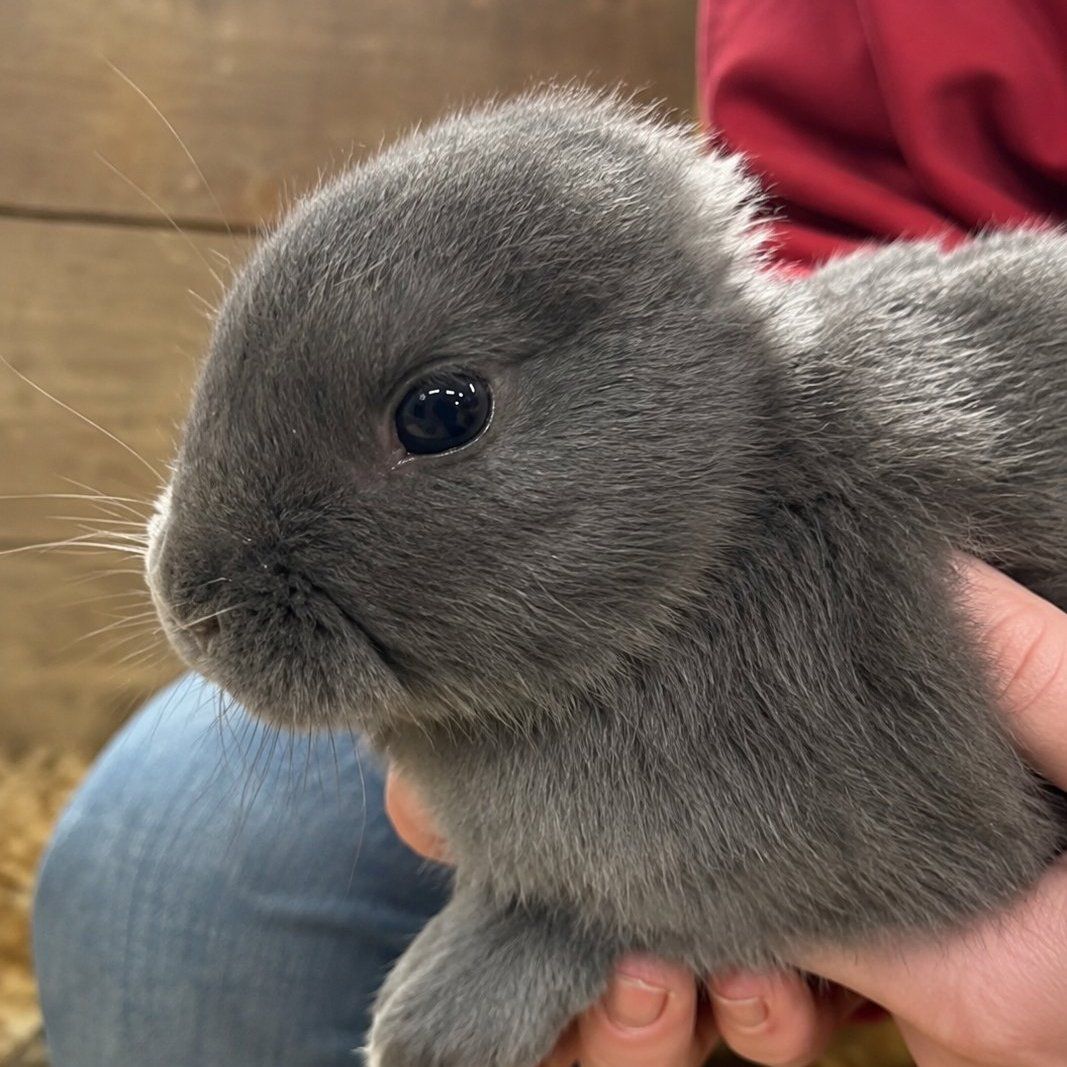
The story of Van Gogh, a tiny gray rabbit born in 2025, captures a rare intersection of biology and human kindness. While his siblings developed the long, velvety ears typical of their breed, Van Gogh emerged as a genetic anomaly. He was the only member of his litter born without any external ear flaps. His smooth head gave him a distinct, albeit unusual, profile that immediately set him apart from the rest of the burrow.

His name, of course, is a witty nod to the famous Dutch post-impressionist painter Vincent van Gogh. The artist famously cut off a portion of his own left ear during a period of mental distress. While the bunny’s situation is far less tragic, the moniker stuck. It turned what could have been seen as a disability into a point of pride and personality.

His caretakers were initially concerned about his health and sensory abilities. However, they soon discovered that the absence of external ears was not a functional deficit. According to the team looking after him, his ability to perceive sound remains fully intact. The rabbit lacks the outer cartilaginous structures, but his internal auditory systems work perfectly. In their own words, the condition is purely aesthetic.

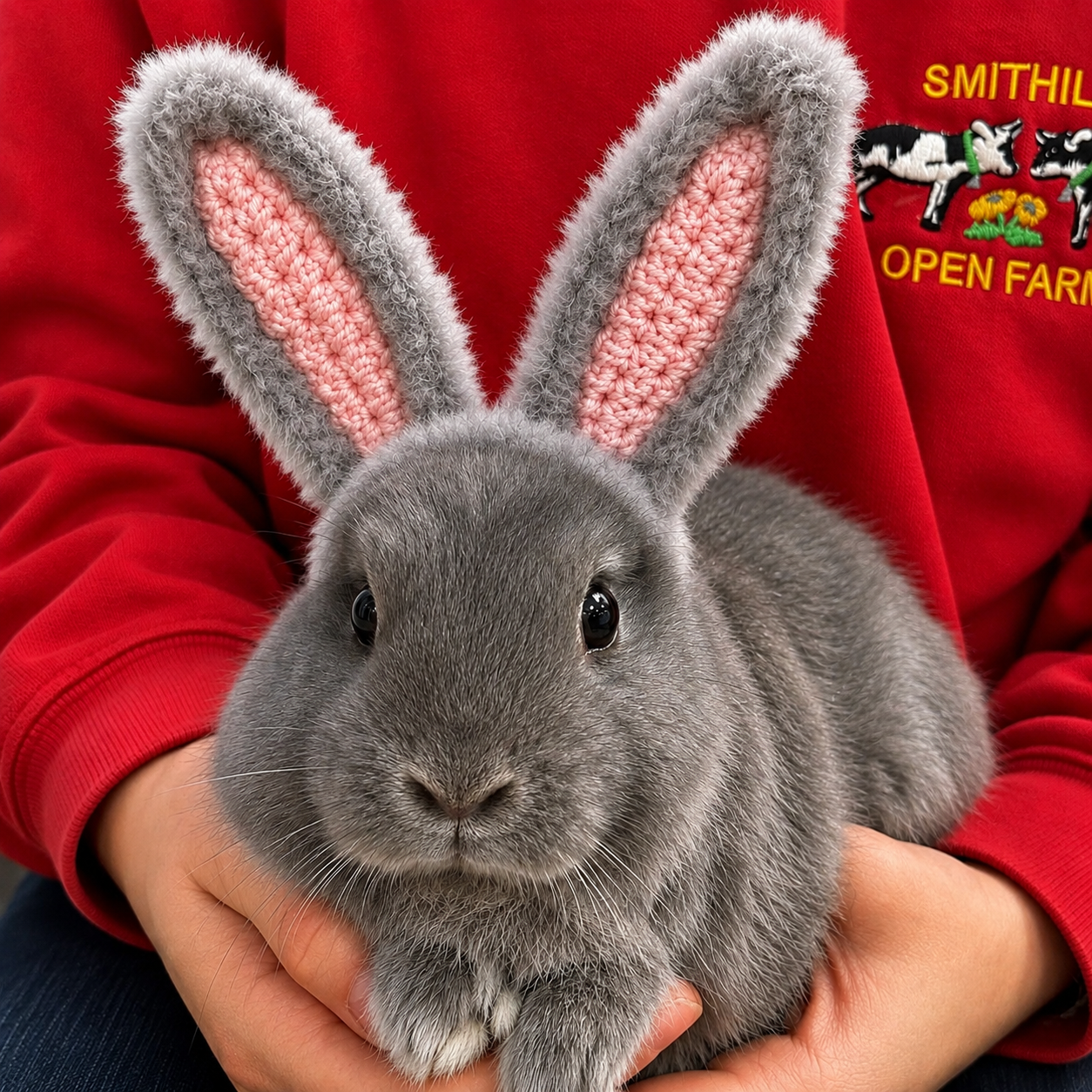
Watching Van Gogh navigate his world, one of the farmers decided the bunny deserved to look the part of a traditional rabbit. This farmer happened to run a side business focused on crocheting hair accessories. Using those skills, he crafted a custom pair of miniature, yarn-based ears. These tiny gray accessories sit atop Van Gogh’s head, giving him the classic silhouette he was born without.

Genetic mutations in rabbits, such as being born without ears, are rare but documented. These occurrences usually stem from a recessive gene or a spontaneous mutation during embryonic development. In the wild, this would be a death sentence. Rabbits rely on their ears for more than just hearing. They act as sophisticated radar dishes to detect the footfalls of predators from long distances. Perhaps more importantly, rabbits use their ears to regulate body temperature. The large surface area and network of blood vessels in a rabbit’s ear help them shed heat in warm weather.

Because Van Gogh lives in a protected farm environment, these survival pressures are non-existent. He does not need to worry about foxes or overheating in the British climate. His crocheted ears are strictly for fashion and social media fame. His caretakers are careful with his wardrobe, however. The bunny only wears his artificial ears during supervised photo sessions to ensure he does not snag them on anything or become distressed.

Public reaction to Van Gogh has been overwhelmingly positive. The video of him hopping around with his yarn ears has circulated across social media platforms, sparking a wave of “pawsitivity.” Commenters have praised the farmer’s creativity and the bunny’s calm demeanor. It is a classic example of how the internet rallies around animals that don’t fit the standard mold.

Beyond the cuteness factor, Van Gogh’s story highlights a growing trend in animal care. More often, farmers and pet owners are using DIY crafts like 3D printing and crocheting to assist animals with physical differences. We have seen tortoises with 3D-printed shells and dogs with custom-built wheelchairs. A pair of crocheted ears might be simpler, but the intent is the same. It celebrates the unique life of an animal that might otherwise be overlooked.

Van Gogh continues to live his life on the farm, blissfully unaware of his viral status. He spends his days like any other rabbit, munching on greens and socializing with his siblings. He just happens to do it with a little more style than the average bunny. As he grows, he serves as a small, furry reminder that being different is just another way to be “purely aesthetic.”

Similar Posts