81-YEAR-OLD WORKS 14-HOUR DAYS FOR WIFE’S CANCER BILLS—INTERNET RAISES $700K
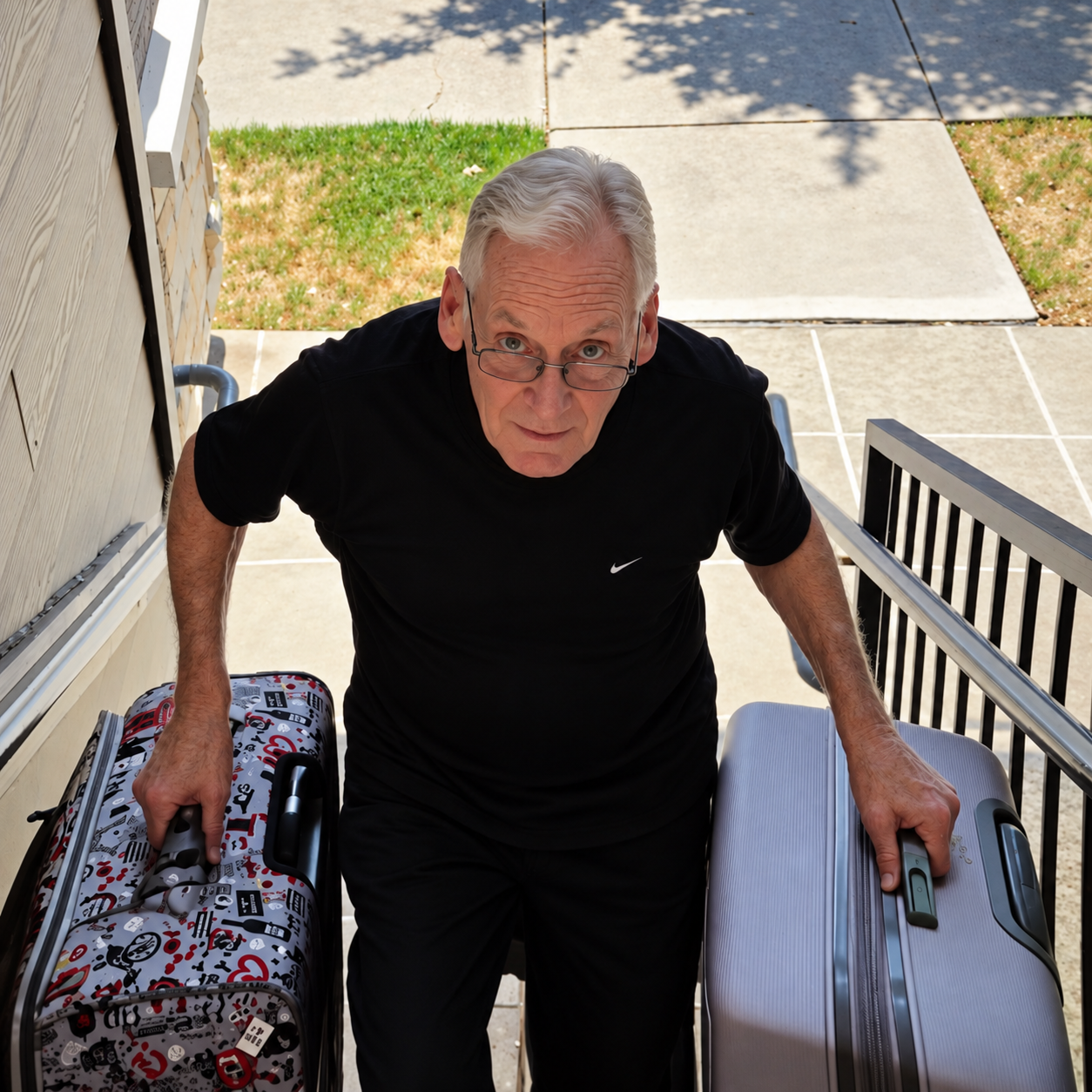
The image of an 81-year-old man hauling heavy suitcases up steep stairs represents more than a personal struggle. It highlights the growing intersection of the American healthcare crisis and the reality of the “unretired” workforce. When Donald Johnson showed up at a North Texas doorstep in 2026, he wasn’t just delivering luggage; he was fighting for his wife’s life.
Erin Howell, a resident of The Colony, Texas, checked her doorbell camera and saw something distressing. She watched an elderly man move with visible pain as he managed her lost airline bags. The physical toll of the labor was obvious. Johnson moved slowly, painstakingly navigating the stairs with luggage that would challenge a man half his age. Howell didn’t just take her bags; she stepped out to ask the man his story.
Donald Johnson revealed that he had been working as an independent contractor for three years. His primary task involved delivering lost luggage for airlines. He took the job because it was the only work he could find at his age. Behind this grueling schedule sat a desperate motivation. His wife of 57 years, Josephine, is currently battling cancer. The mountain of medical bills forced Donald back into the workforce long after most people have finished their careers.
The physical demands on Johnson were extreme. He told Howell he had put over 200,000 miles on his vehicle while chasing delivery routes. This constant driving caused his car to begin failing, threatening his only source of income. This scenario is becoming increasingly common in the United States. Recent labor statistics show that the number of workers over age 75 is expected to grow by nearly 100% over the next decade. While some work for fulfillment, many like Johnson work out of pure necessity.
Howell felt she could not ignore what she witnessed. She launched a GoFundMe campaign to help the couple manage Josephine’s treatment and allow Donald to finally stop working. The response from the North Texas community and the internet at large was swift and overwhelming. Within a short period, over 5,300 donors contributed to the cause. The total surpassed $700,000, a life-changing amount for a couple living on the edge of financial ruin.
This surge of digital generosity reflects a broader trend known as “mutual aid” or “crowdfunded safety nets.” Because the American medical system often leaves seniors with massive out-of-pocket costs, strangers frequently step in to fill the gaps. While the outcome for the Johnsons is beautiful, many social critics point out the “dystopian” nature of these stories. They argue that an 81-year-old shouldn’t have to rely on a viral fundraiser to afford cancer medication for his spouse.
The Johnsons are currently navigating the transition from survival mode to stability. Donald told local reporters that the prospect of retiring is finally becoming a reality. He noted that they aren’t “over the hump” yet, but the financial pressure has eased significantly. Josephine expressed that the most impactful part wasn’t just the money. She found strength in the prayers and kind comments left by thousands of strangers. It changed her perspective on her fight against cancer, giving her a “joyful feeling” during a dark time.
The story highlights the specific challenges of ageism in the modern job market. When Donald said this was the only job that would hire him, he touched on a painful truth. Many seniors find themselves relegated to “gig economy” roles like delivery driving or grocery shopping. These jobs offer no benefits and require significant physical stamina. They are often the only doors open to those who need to pay for modern medical advancements on a fixed income.
This incident in The Colony serves as a reminder of the power of individual observation. Had Erin Howell not looked at her camera or asked a question, Donald might still be hauling bags today. Her decision to act transformed a moment of heartbreak into a movement of support. It also highlights the importance of the “lost luggage” industry, a niche corner of travel that most people never think about until their bags go missing.
Moving forward, the $700,000 will serve as a dedicated fund for Josephine’s ongoing care. It also provides a safety net for Donald, who can now focus on being a caregiver rather than a courier. As the “silver tsunami” of aging citizens continues, more communities may find themselves rallying around seniors like Donald. For now, one couple in North Texas can finally breathe a little easier.