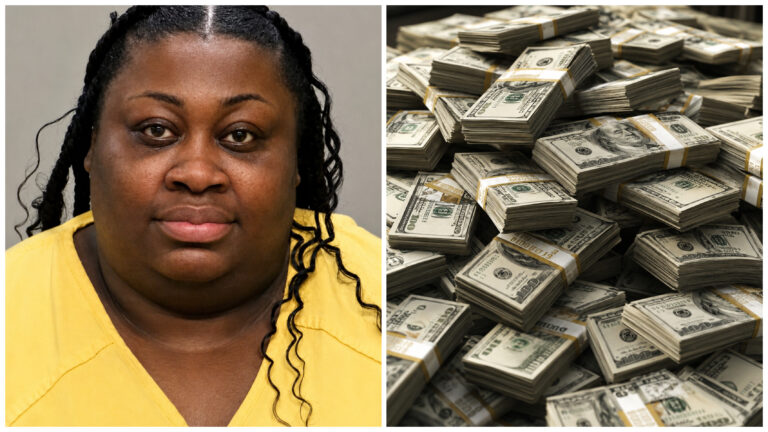
THIS WOMAN WITH A PHD IN MATHEMATICS FIGURED OUT THE LOTTERY ALGORITHM AND WON IT FOUR TIMES FOR OVER $21 MILLION
The dream of hitting a lottery jackpot once keeps millions of people buying tickets every single week. Most players understand the odds remain stacked heavily against them, yet they hope for that singular lightning strike of luck. Joan Ginther did not just wait for lightning to strike; she seemingly bottled it, capturing four massive multi-million dollar prizes over a seventeen-year span.
Ginther’s run of good fortune remains one of the most statistically improbable events in the history of gambling. Between 1993 and 2010, the Texas native collected checks totaling $20.4 million. While many dismissed her success as an extreme outlier of luck, her background suggests a much more calculated approach to the scratch-off bin. Ginther was no ordinary gambler; she held a PhD in statistics from Stanford University and formerly taught college-level mathematics.
Her winning streak began in 1993 with a $5.4 million haul from a standard Lotto Texas draw. Most people would take that money and retire to a quiet life of luxury. Ginther, however, was just getting started. In 2006, she won $2 million from a Holiday Millionaire scratch-off. Two years later, she hit for another $3 million. The climax of her incredible run occurred in 2010 when she scratched off a $10 million winner from a $50 ticket.

The geographic distribution of her wins raised almost as many eyebrows as the frequency. Two of her winning tickets originated from the exact same convenience store in the small town of Bishop, Texas. For a woman who had relocated to Las Vegas and spent significant time in California, her consistent return to the same Texas storefront suggested a strategy rather than a coincidence.
Statisticians who have analyzed Ginther’s history suggest the odds of one person winning this many times are approximately one in eighteen septillion. To visualize that, imagine the number eighteen followed by twenty-four zeros. These astronomical figures led experts like Alan Salzberg to conclude that Ginther likely used her advanced understanding of algorithms to exploit the system.
The prevailing theory is that Ginther decoded the shipping patterns or the distribution algorithms used by the Texas Lottery Commission. Scratch-off games are not truly random; they are printed in rolls and distributed to vendors based on specific inventory schedules. A mathematician with enough data could theoretically predict which regions or specific stores were due for a high-value ticket. By reinvesting her initial 1993 winnings into bulk ticket purchases in specific locations, Ginther could have significantly tilted the scales in her favor.
Despite her massive wealth, Ginther never embraced the flashy lifestyle typically associated with lottery winners. She did not buy fleets of sports cars or build sprawling mansions. Those who knew her described a woman who dressed simply and avoided the spotlight. Her few indulgences included long vacations in Spain and a deep affection for her cats. She moved to a high-rise near the San Antonio River Walk later in life, maintaining a reputation as a kind and humble neighbor.
Her generosity became her true legacy in her local community. Rather than hoarding her millions, Ginther acted as a quiet benefactor for those in need. She reportedly funded college educations for multiple children and stepped in to help friends facing financial ruin. When a longtime friend’s home was destroyed by fire in 2011, Ginther proactively deposited funds into the woman’s account to ensure she could recover. She even gifted her late father’s home to the man who had maintained the yard for years.
Public reaction to Ginther’s story usually falls into two camps. One side views her as a genius who outsmarted a system designed to take money from the poor. They see her as a folk hero who used the house’s own rules against it. The other side wonders if her actions constitute an unfair advantage, though the Texas Lottery Commission never found evidence of wrongdoing or illegal play.
Joan Ginther passed away at the age of 77 in 2024. She took the secrets of her success to the grave, leaving behind a mystery that continues to fascinate both gamblers and mathematicians. Whether she was the luckiest woman to ever live or a brilliant strategist who solved an unsolvable puzzle, her story serves as a reminder that sometimes, the numbers really do add up.