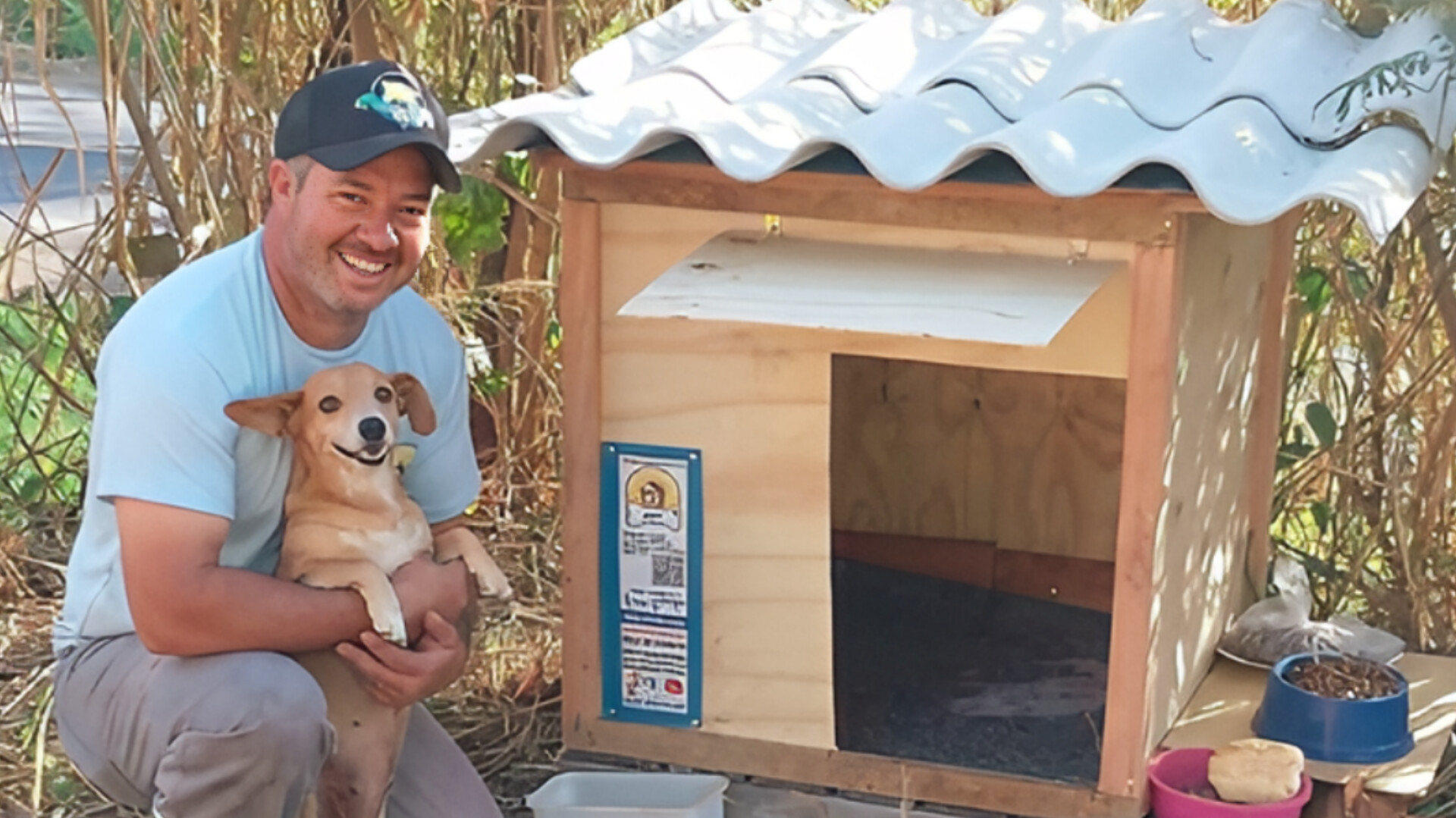
BRAZILIAN TRUCK DRIVER BUILT 1,700+ SHELTERS FOR STRAYS
A Brazilian truck driver has built more than 1,700 wooden shelters for dogs and cats with nowhere safe to sleep.
Leomar Aparecido Miguel lives in São José do Rio Preto, in the state of São Paulo, Brazil. AOL profiled him on July 27, 2026, and his initiative is called Semeadores do Bem Pets. He makes the shelters in his free time and keeps working as a truck driver.
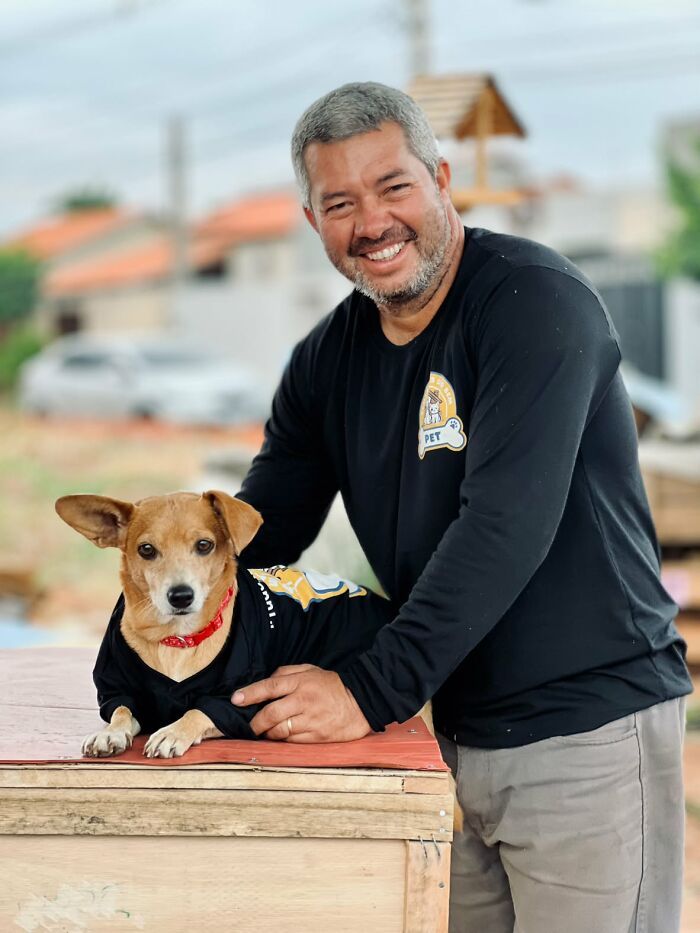
Onedio reported that Miguel started after noticing animals exposed to rain and cold while he rested in his truck.
He had no carpentry experience and taught himself woodworking, Onedio reported.
The animals’ response became part of the story early on. g1 ran a headline quoting Miguel: “Reação dos animais é indescritível” (“The animals’ reaction is indescribable”).
How it started
On January 23, 2025, g1 reported that Miguel was then 45 and had made and donated 235 shelters in a little over a year.
His first delivery went to two street dogs in the Nato Vetorazzo neighborhood. People thanked him afterward, g1 reported.
Community members and partner companies donated materials for those first 235 shelters, Metrópoles reported. The outlet described the dogs’ response as looks of gratitude and “smiles.”
What happened next
The project grew well beyond that first batch. It has now provided more than 1,700 shelters, AOL reported.
Só Notícia Boa reported that Miguel turned a plot of land into an improvised workshop. The shelters are handed out free of charge.
They go to animal shelters, independent rescuers and low-income families, AOL reported.
Miguel gets about 10 requests per day, Onedio reported.
Donations cover some of the wood and other materials, and Miguel sometimes pays for shortages out of his own income. Volunteers help with materials and transportation, Onedio reported.
Onedio estimated that the shelters have reached approximately 5,000 stray animals.
Click Petróleo e Gás reported that a city council document filed on July 2, 2026, put the number of animals directly helped at more than 5,000. They were rescued from São José do Rio Preto and nearby municipalities.
AOL described Miguel’s message as a simple one: people shouldn’t wait until they can do something big.
On July 7, 2026, São José do Rio Preto’s City Council approved a motion of applause recognizing the project after a vote.