24 MILLION WATCHED 4-YEAR-OLD ‘MARRY’ HER FAVORITE NURSE
A 4-year-old cancer patient got her wish: a pretend wedding to her favorite nurse, with rose petals and ring pops.
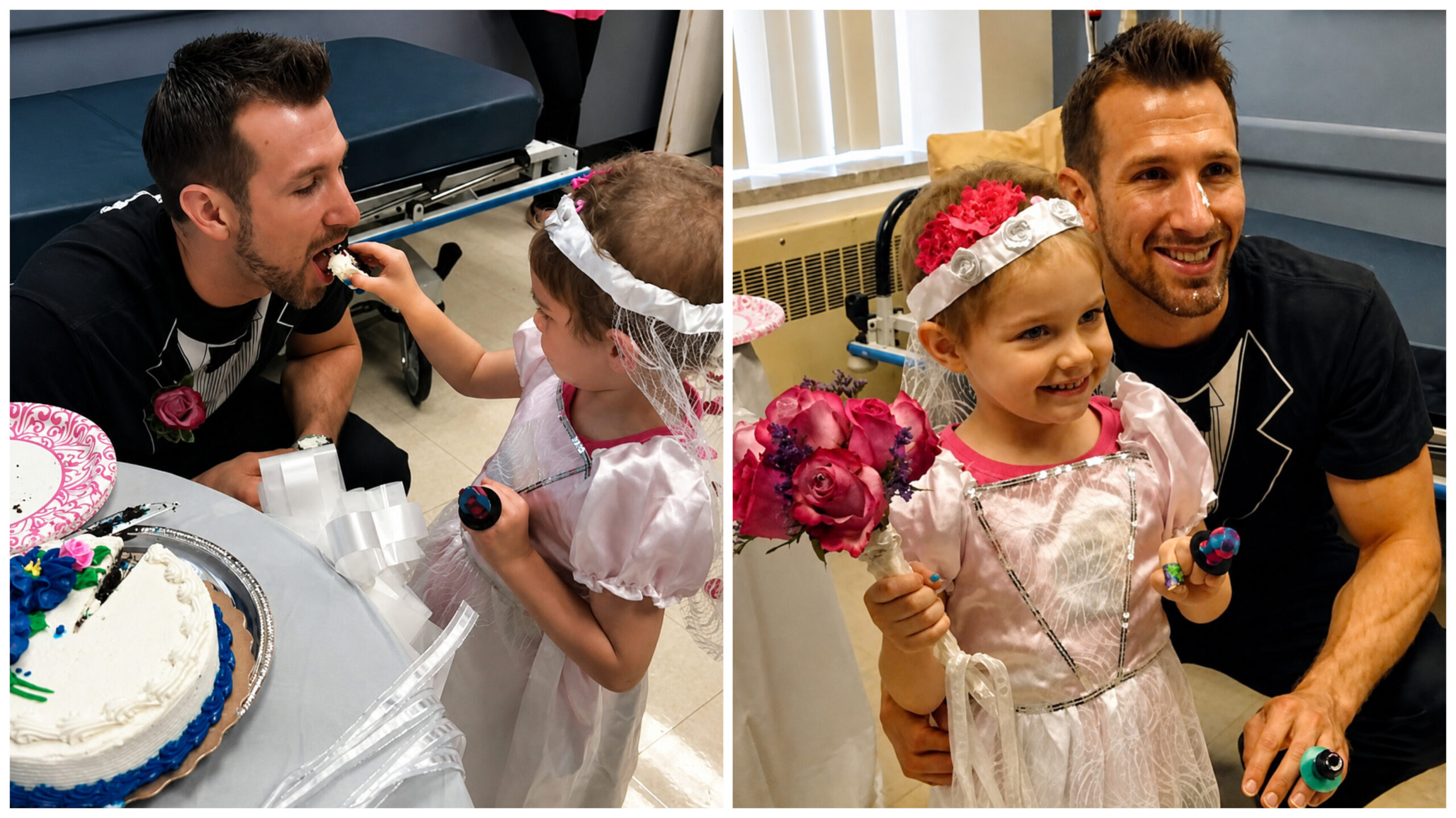
Abby Sayles was being treated for leukemia at the Melodies Center for Childhood Cancers at Albany Medical Center in Albany, New York, when hospital staff threw a playful ceremony for her and nurse Matt Hickling on July 16, 2015. It was all pretend, not a legal marriage.
Abby’s mother, Renee Sayles, told NBC News that Abby was looking forward to marrying her “prince charming” and favorite nurse.
Abby asked Hickling to marry her, CBS News reported, and the staff got to work. Hickling said the team pulled the whole thing together in less than 24 hours.
The ceremony
The aisle was covered in rose petals, and nurses served as bridesmaids. Hickling dressed for the occasion in a tuxedo T-shirt worn with his scrubs.
A local florist donated the flowers, TIME reported.
A doctor led the ceremony, INQUIRER.net reported. When Abby asked, Hickling answered, “Of course, I will marry you.”
The couple then shared cake and ring pops. Abby called the day the “best day ever,” WNYT reported.
Hickling told NBC that Abby is a big presence on the ward. “Abby herself is really bright and charismatic. She has a smile that can light up a room or the whole center really. She has a face you really can’t forget,” he said.
He also explained why the staff went all out. “We can make these memories so it’s something they [the patients] can hold on to,” Hickling said.
Deseret News quoted Hickling’s personal Facebook post: “This day will hopefully be one our patient and her family can always look back on and smile when days are tough! I know I will!”
Abby’s mother said she felt blessed to have such caring staff looking after her daughter, Global News reported.
What happened next
Nurse Lori Ciafardoni posted video of the ceremony to Facebook. Hickling said the clip showed the hospital staff’s teamwork.
He also gave an update on Abby’s health. She was feeling very well, he said, with another year and a half of maintenance therapy ahead before she could hopefully move into remission.
By July 20, 2015, the video had been viewed more than 24 million times on Facebook, NBC reported.