NURSE SAVED FAILING PREMATURE BABY IN SISTER’S INCUBATOR
On November 12, 1995, a Massachusetts nurse took a chance by placing a failing premature baby into the same incubator as her stronger twin sister. The desperate move stabilized the infant when her sister wrapped her arm around her, creating a famous moment that changed medical practices for premature babies.
Kyrie and Brielle Jackson were born on October 17, 1995, arriving a full 12 weeks before their due date at The Medical Center of Central Massachusetts in Worcester.
At the time, the hospital’s standard practice was to place premature twins in completely separate incubators. Doctors did this in order to reduce the risk of infection. Both babies were placed in their own separate units to grow.
Kyrie weighed 2 pounds and 3 ounces at birth. She gained weight and made steady progress in her incubator. Brielle faced a much harder fight. The tiny infant struggled with a racing heart, severe breathing problems, low oxygen levels, and very little weight gain.
The situation turned critical on November 12. Brielle’s stick-thin arms and legs turned a bluish-gray color as she gasped for air. Her heart rate soared dangerously high. Her parents, identified by Snopes as Heidi and Paul Jackson, watched the terrifying scene unfold, fearing their little daughter might not survive.
Staff nurse Gayle Kasparian decided to try a co-bedding procedure that was virtually unknown in the United States at the time. After exhausting all conventional remedies, she asked Heidi and Paul for permission to move Brielle into Kyrie’s bed. The hospital later called the move the first instance of its kind at the facility.
The results were immediate. The moment Kasparian closed the incubator door, Brielle snuggled right up to Kyrie and began to calm down. Within minutes, her blood-oxygen readings improved significantly.
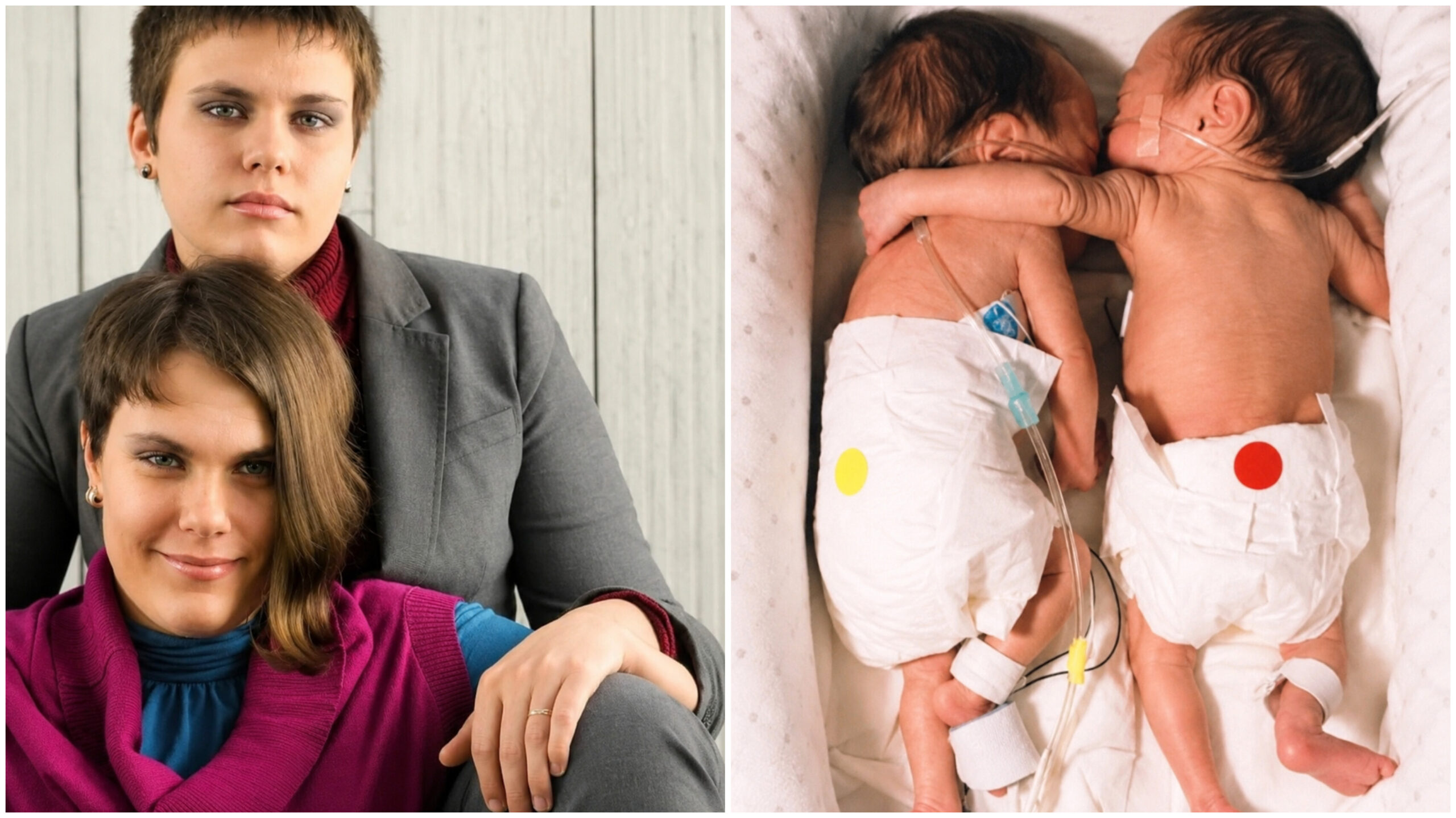
As the babies dozed together, Kyrie reached out and wrapped her left arm around her smaller sister. Brielle’s heart rate stabilized under the embrace, and her body temperature rose back to normal.
A worldwide sensation
The twins recovered beautifully and went home just before Christmas, according to a California State University, Northridge report. By the time they left the hospital at about two months old, they each weighed well over five pounds. Their parents placed them in the same bed at home, where they continued to thrive and grow stronger.
A hospital photograph of Kyrie’s arm wrapped over Brielle quickly became known as the “Rescuing Hug.” The image appeared in Life magazine and Reader’s Digest in 1996, bringing massive fame to the sisters. The overwhelming media attention over the story actually led Heidi and Paul to change their telephone number for privacy.
The famous photograph spurred a massive, growing interest in co-bedding premature twins, triplets, and quads. The Life Institute reported that the University of Massachusetts Memorial eventually co-bedded at least 100 sets of premature multiples. Observing the practice over a period of five years, the hospital staff found zero cases of twin-to-twin infection.
Clinical studies followed the trend, showing that premature twins enjoy substantial health benefits when placed in the same bed. Researcher Mary Whalen documented several of these benefits, including decreased apnea problems, increased weight gain, and better feeding.
Whalen also reported that co-bedding led to improved temperature regulation and decreased agitation for the infants. Hospitals saw shorter stays for the babies and a much lower likelihood of readmission.
As for the Jackson twins, the physical bond forged in that hospital incubator held strong long after they left the medical center. About five years after their famous rescue, Heidi and Paul reported that the girls still slept in the same bed and, naturally, still snuggled together.