TEXAS TEEN MOM HANDS 1-MONTH-OLD SON TO STRANGER AT BUS STOP, FLEES IN UBER
Parenting often brings people to their breaking point, but few stories capture that desperation quite like a recent encounter in downtown San Antonio. What began as a mundane interaction at a bus stop quickly spiraled into a legal nightmare for a young mother and a confusing rescue mission for a bystander. The incident highlights a terrifying reality: sometimes, the safety net designed to catch struggling parents fails to reach those who need it most.
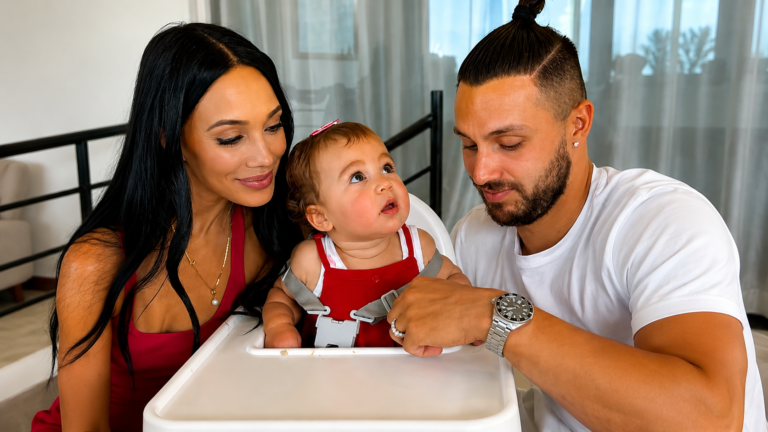
In September 2026, 18-year-old Karla Ibarra was waiting at a San Antonio bus stop with her one-month-old son. She approached Jennifer Benavides, ostensibly to borrow a cell phone. As the two chatted, Benavides did what most people do when they see a tiny infant: she offered a compliment. She remarked on how cute the baby was, likely expecting a polite thank-you from a proud new parent. Instead, Ibarra’s response chilled her.

Ibarra reportedly looked at the stranger and asked if she wanted the child. The teen mom wasn’t speaking in metaphors or venting about sleep deprivation. She was literal. She told Benavides she was going to ‘give him away’ to anyone who would take him. To prove she was serious, Ibarra began pulling official paperwork from her bags. She handed Benavides the infant’s birth certificate, his Social Security card, and his Medicaid documents, effectively trying to transfer the child’s entire legal existence to a woman she had just met.
Shell-shocked, Benavides tried to stabilize the situation. She didn’t want to leave the baby in the hands of someone so clearly detached, but she also didn’t want the mother to simply vanish into the city streets. She led Ibarra and the infant to a friend’s house nearby, hoping a change of scenery or more support might calm the young woman. It didn’t work. Shortly after arriving, Ibarra hailed an Uber and fled the scene, leaving her one-month-old son behind with two women who were essentially strangers.
The two women immediately stepped into a caregiver role, feeding the infant and changing his diaper before contacting the San Antonio Police Department. Officers eventually located and arrested Ibarra when she returned to the general area later that day. While the child was placed safely with other relatives, Ibarra now faces a felony charge of abandoning and endangering a child with the intent to return. Her bail was set at $7,000 in Bexar County.
This incident has sparked a heated conversation about the effectiveness of Safe Haven laws. Texas is famous for its “Baby Moses Law,” which was the first of its kind in the United States, enacted in 1999. Under this legislation, a parent can legally and anonymously leave a baby at a fire station, hospital, or emergency medical services provider without fear of prosecution, provided the infant is unharmed and under 60 days old. Despite this being one of the most robust safe-surrender programs in the country, Ibarra chose a bus stop and a stranger instead of a designated safe site.
Advocates for maternal mental health point out that 18-year-old parents are often in a state of extreme crisis that prevents logical decision-making. Postpartum psychosis or severe depression can cloud judgment to the point where a mother sees her child as a burden to be discarded rather than a person to be protected. Public reaction to the story has been divided. Some commenters on social media have slammed Ibarra as “heartless,” while others point to the total failure of the social support system for teen mothers in Texas.
The “Baby Moses Law” was named after the biblical story of a mother placing her child in a basket on the Nile to save him. The modern version is supposed to be that basket. Since Texas pioneered the law, all 50 states have adopted similar statutes. However, statistics show that many parents in crisis still do not know these laws exist, or they fear that “anonymous” surrender is a trap. In 2026, the lack of awareness continues to lead to dangerous abandonments in parks, trash cans, or, in this case, public transit hubs.
Fortunately, the infant in this case was handed to someone with a conscience. If Benavides had not been there, or if Ibarra had approached someone with predatory intentions, the outcome would have been tragic. The legal system will now decide Ibarra’s fate, but the broader question remains: how do we ensure the next struggling parent finds a fire station instead of a bus stop? For now, a one-month-old boy is safe, and a young woman faces the heavy consequences of a desperate choice.