GERMAN FARM GAVE AWAY 500,000 KILOGRAMS OF FREE POTATOES
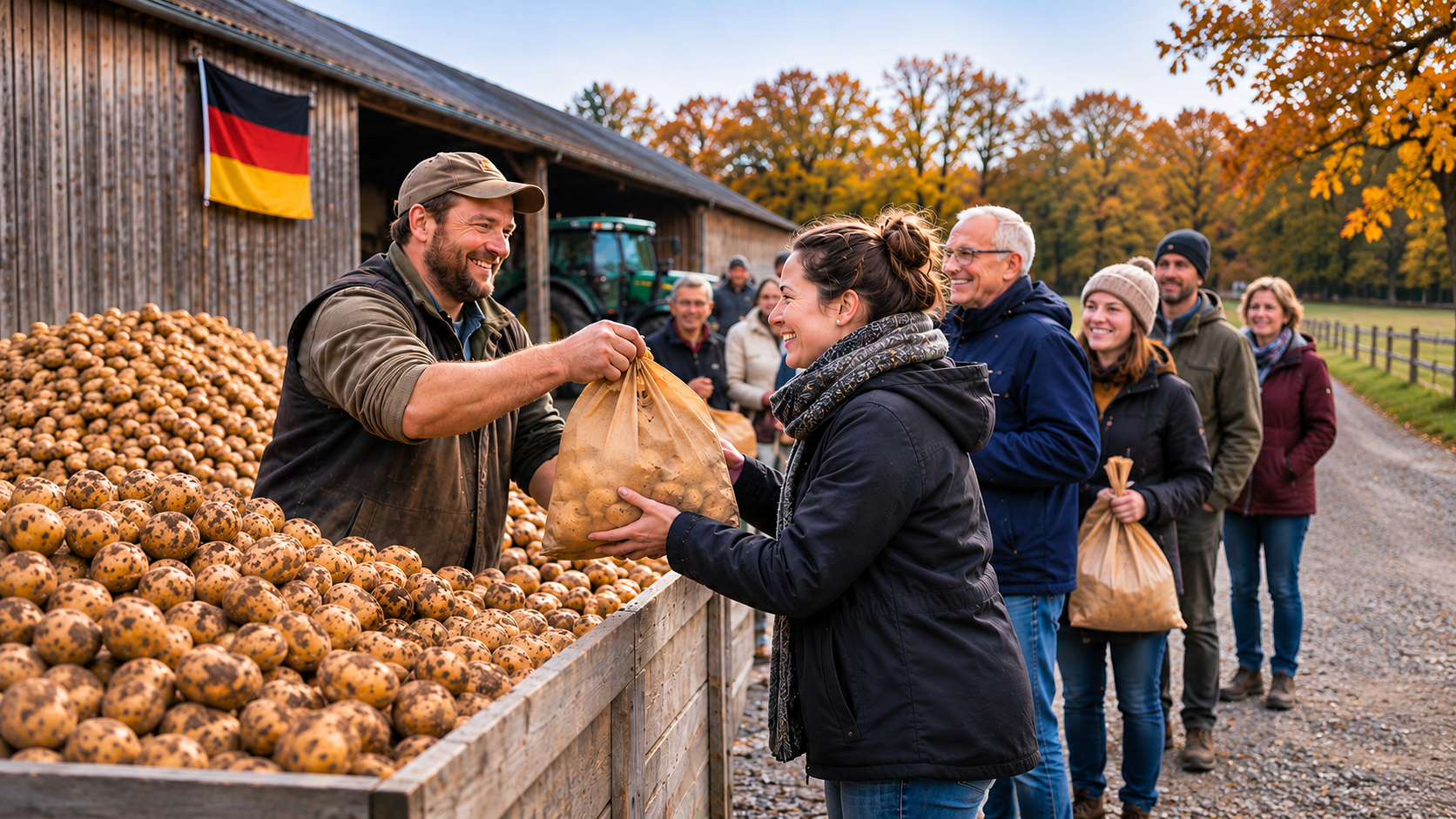
In early 2026, a farm in the German state of Saxony gave away around 500,000 kilograms of surplus potatoes after a canceled commercial contract left them with a massive stockpile. The agricultural firm Osterland Agrar teamed up with a newspaper and an eco-friendly tech company to truck the potatoes into Berlin, offering them for free to residents, schools, and churches.
The farm ended up with a roughly four million kilogram surplus following a bumper harvest in 2025. The search engine company Ecosia attributed the massive yield to ideal growing conditions throughout the season.
As the potato-producing capital of the European Union, Germany saw its broader market completely saturated by the exceptional harvest. Der Tagesspiegel noted that the overproduction led directly to falling agricultural prices across the country.
Managing director Hans-Joachim von Massow told the BBC that the farm retained the physical inventory after a customer order was canceled and financially settled. The potatoes were kept in cool, dry halls at the farm south of Leipzig. The company had enough warehouse space to store the tubers until the middle of the year, but they needed to find an eventual destination for them.
Not wanting the magnificent tubers to rot or be discarded back into the fields, Ecosia and the Berliner Morgenpost newspaper stepped in to fund and coordinate a sprawling distribution effort. Organizers dubbed the initiative “the great potato rescue.”
The first truckload of free carbohydrates began rolling toward the German capital on January 15, 2026. A dedicated website listed 174 distribution hubs in and around the city to funnel the food to anyone willing to brave the winter weather.
Thoughtless do-gooders
The logistics of giving away that much food required significant manpower. According to a report by DIE ZEIT, more than 1,000 volunteers registered to help distribute the potatoes once they arrived in Berlin.
The initial deliveries included a 25-tonne truckload destined specifically for Berliner Tafel, a local food bank. Social organizations like Volkssolidarität also threw their support behind the effort to distribute the surplus to daycare centers and social institutions.
Berliner Morgenpost editor Peter Schink, who helped spearhead the plan, said the goal was “putting the potato in the spotlight as a valuable food.”
While residents and charities welcomed the massive donation, the Brandenburg Farmers’ Association was entirely unamused by the sudden influx of free starch. The agricultural group declared the giveaway a “disgusting PR stunt” that threatened to disrupt local vegetable markets.
“Food is and will remain valuable, even if thoughtless do-gooders throw around free potatoes at schools and churches,” Timo Scheib of the Brandenburg Farmers’ Association said.
Despite the grand promises of endless tubers and a highly publicized rollout, actually finding one on the street required some luck. When reporters visited a designated pickup spot at Tempelhofer Feld, a decommissioned airfield in the city, there were no potato sacks in sight.
One local resident appeared completely mystified, and slightly concerned, when asked about the free vegetables in her neighborhood.
Ultimately, Osterland Agrar estimated they transported around 500,000 kilograms of potatoes to Berlin, other parts of Germany, and Ukraine.
On January 29, 2026, organizers confirmed the Berlin distribution was winding down as funding for the transportation dried up. One final truckload of potatoes was expected to make the trip once the weather warmed up enough.