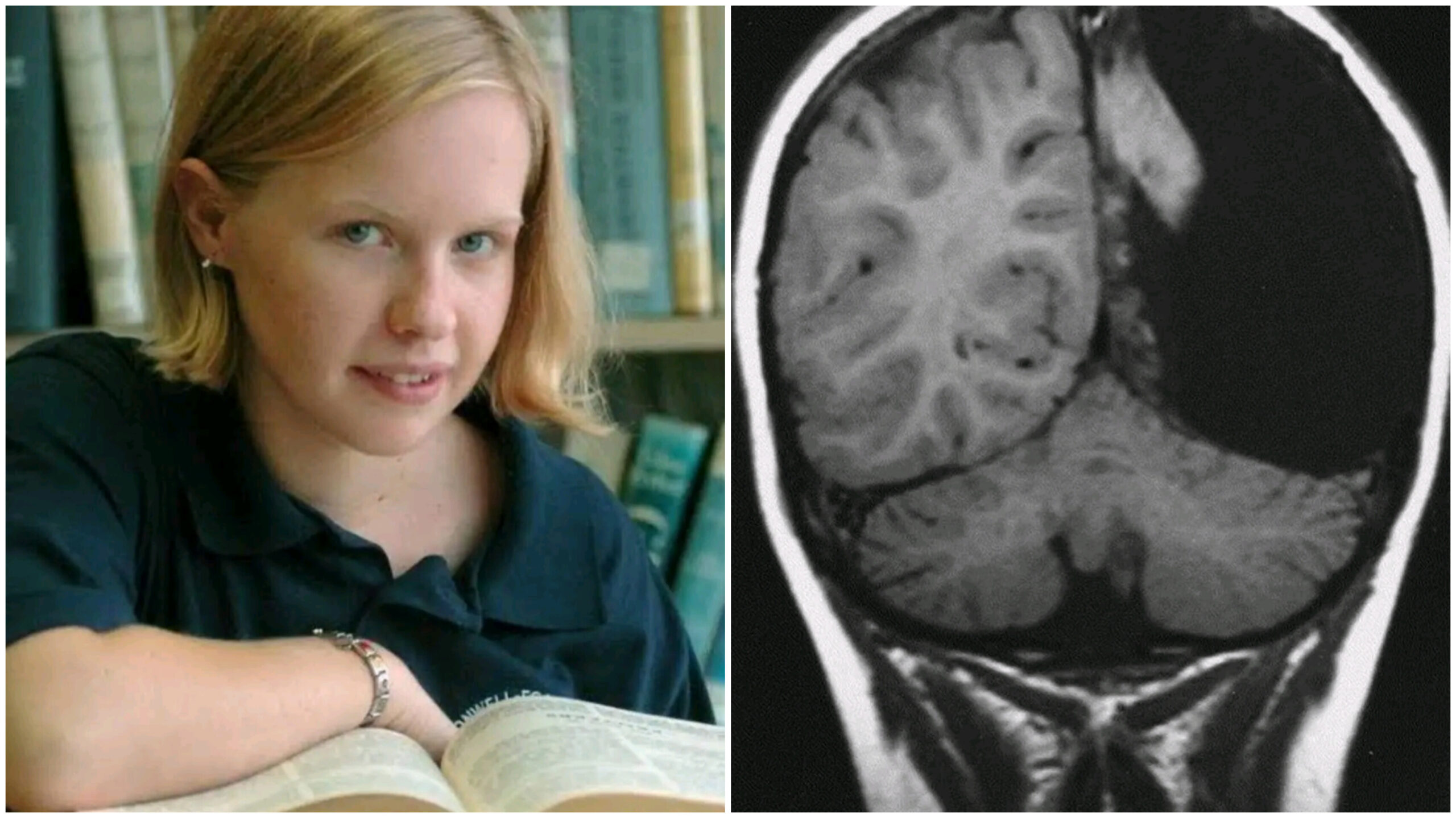
WOMAN WHO HAD HALF HER BRAIN REMOVED IS A SPEECH PATHOLOGIST
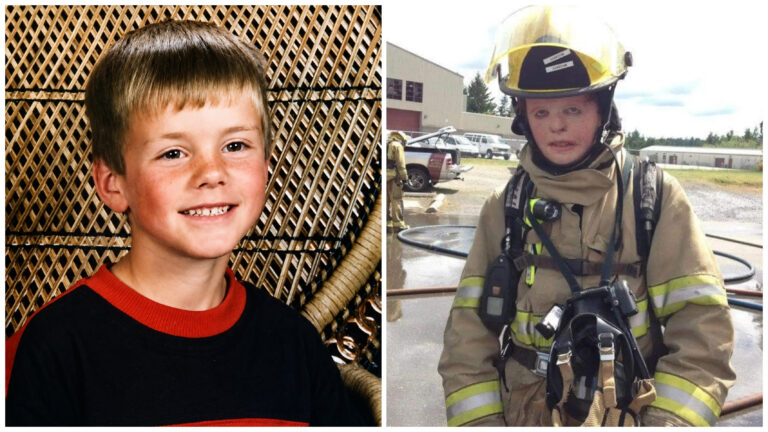
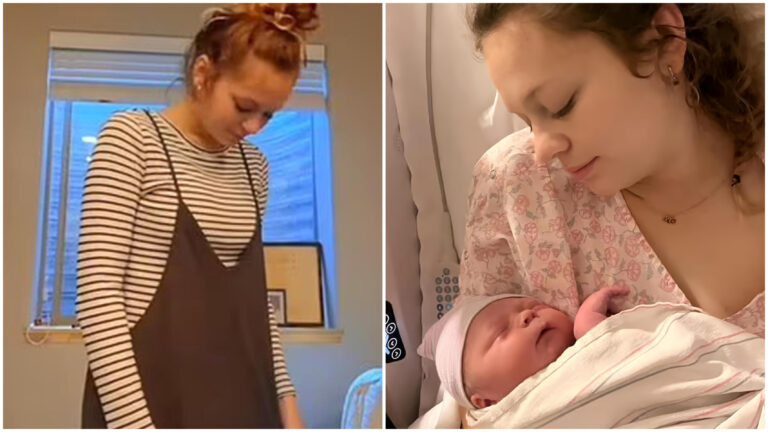
Christina Santhouse was eight years old when she began suffering up to 150 seizures a day from a rare autoimmune disease, leaving doctors with one option: having half her brain removed. Decades after the 1996 radical surgery left her with physical limitations on her left side, she has earned a master’s degree, built a career as a speech pathologist, and started a family of her own.
The medical ordeal began during a family vacation to the New Jersey shore. Santhouse’s foot began shaking uncontrollably, leading her puzzled family to rush her to the hospital.
She was soon referred to St. Christopher’s Hospital for Children in Philadelphia, where she spent three days undergoing tests. Doctors diagnosed her with Rasmussen’s encephalitis. ABC News reported that the rare autoimmune disease causes the body to attack the brain, killing off cells. At the time, there were fewer than 1,000 cases in the United States.
Her condition deteriorated rapidly after she started the third grade. Santhouse was experiencing up to 150 seizures a day, enduring head-to-toe spasms that sometimes caused her to throw up. Even while suffering a seizure every three minutes, she remained in class, sitting in a beanbag chair for comfort and answering questions.
To stop the seizures, neurologists at Johns Hopkins Children’s Center in Baltimore recommended a hemispherectomy. The procedure involved surgically removing the diseased right half of her brain.
Her mother, Lynne Santhouse-Catarro, was initially horrified by the proposed treatment. “I was devastated,” she said. “I’d never heard of anything so barbaric.” She feared the operation would erase her daughter’s personality and memory, and worried it resembled the lobotomies of the 1930s.
Dr. John Freeman, the neurologist supervising her case, explained that temporary treatments like steroids or chemotherapy would only stop the virus for a while.
“For reasons that are very unclear, the syndrome only affects one side of the brain, never both,” Freeman said. “But how would you feel if I said I had to take out half your brain?”
Freeman advised the family to wait until they were ready, noting that the surgery could not be reversed. It would leave Santhouse with permanent physical changes, including a limp, physical limits in her left arm, and a loss of left peripheral vision. “You never push this on somebody, because there’s no going back,” he said.
Knowing the alternative was likely life in a wheelchair with severe cognitive decline, Santhouse decided she could no longer endure the constant seizures. She wrote a note to her doctor giving her consent. “I don’t want to live like this … I’m ready now,” she wrote.
To prepare for the loss of function on her left side, Santhouse-Catarro, a teacher, wrapped the left part of her daughter’s body. They practiced one-handed tasks like putting on socks and cutting sandwiches, and raced to see who could get dressed the fastest.
A 14-hour brain surgery
On February 13, 1996, pediatric neurosurgeon Dr. Ben Carson performed the 14-hour operation, according to a 2025 follow-up by the Times Leader. Surgeons opened her scalp and skull and removed the right side of her brain. The New Yorker later noted she was the hospital’s hemispherectomy case number 30.
Santhouse woke up to a horrible headache and a swollen face, but just nine weeks later, she was back in school. By high school, she was carrying a 94.7 GPA, taking four academic honors, and competing on the varsity bowling league, proving that she had retained her intellect and memory.
Freeman noted that patients can thrive after the surgery. “You just have to compensate for some of the physical things you lose,” he said.
Decades later, Santhouse has far exceeded the initial hopes for a normal life. The 2025 follow-up reported that she earned both bachelor’s and master’s degrees and worked for six years as a speech and language pathologist for the Bucks County Intermediate Unit.
Now married with two children, Santhouse has built the life her mother once feared was lost. Her neurologist described her in 2025 as being “on the far end of the ‘doing amazing’ scale.”