A SURGEON SURPRISES KIDS WITH HAND-DRAWN DRESSINGS SO A SCAR WON’T BE THEIR LASTING MEMORY OF SURGERY
Waking up from anesthesia is a disorienting, frightening experience for anyone. For a child, the sterile white walls and beeping monitors of a recovery room can feel like a nightmare. They often wake up to find a bulky, clinical bandage covering the site of their surgery, serving as a blunt reminder of their vulnerability. However, one pediatric surgeon in Ohio has spent decades ensuring that the first thing his patients see isn’t a medical wound, but a colorful piece of personalized art.
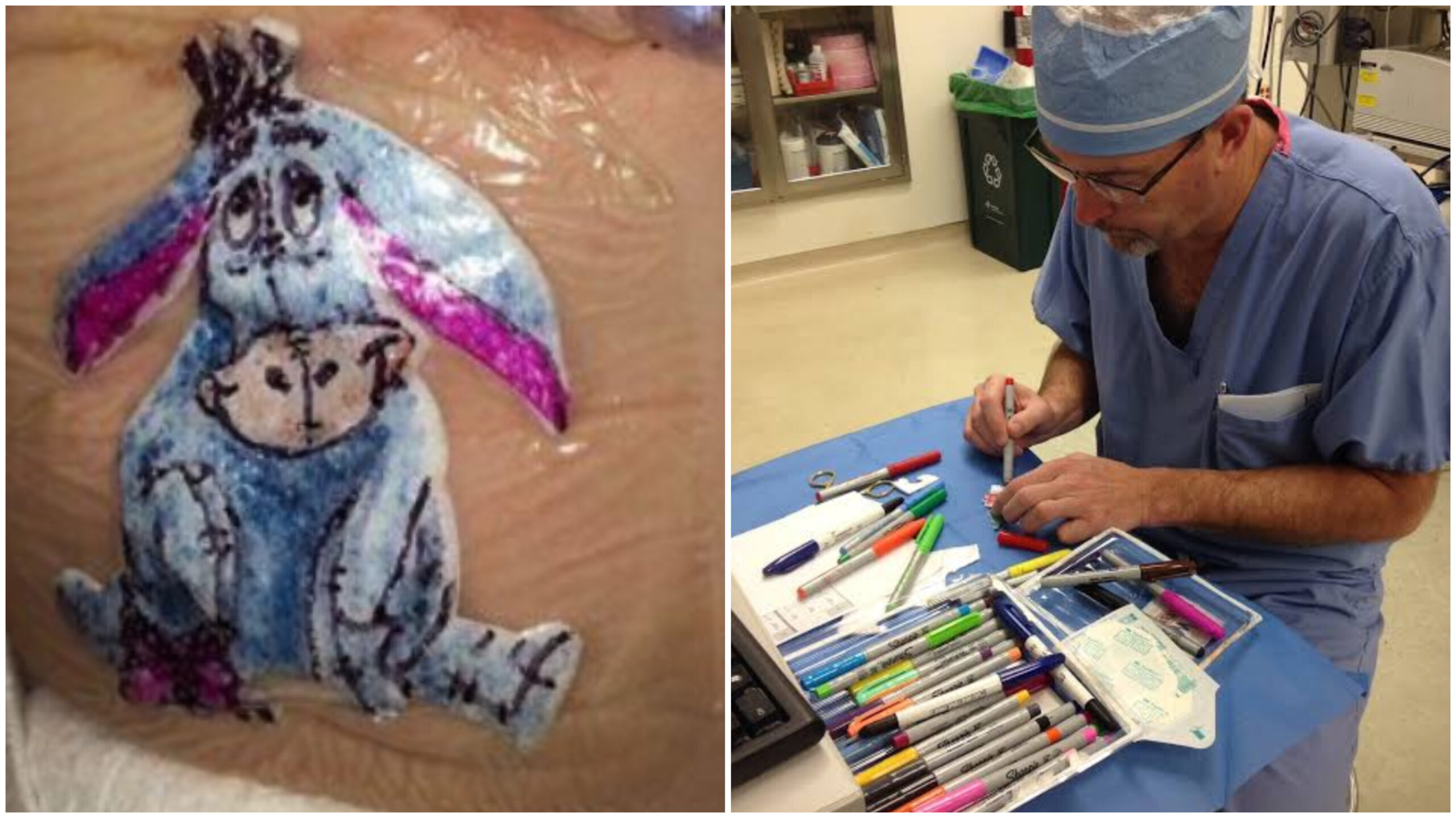
Dr. Robert Parry, a surgeon at Akron Children’s Hospital, has transformed the post-operative experience by trading his scalpel for a set of markers once the heavy lifting is done. He doesn’t just apply a dressing; he creates a masterpiece tailored to the specific passions of the child on the table. By the time he reached a career milestone in 2020, he estimated he had created roughly 10,000 unique drawings. This ritual has turned a routine medical procedure into a viral sensation, proving that modern medicine needs a human touch as much as it needs technical precision.
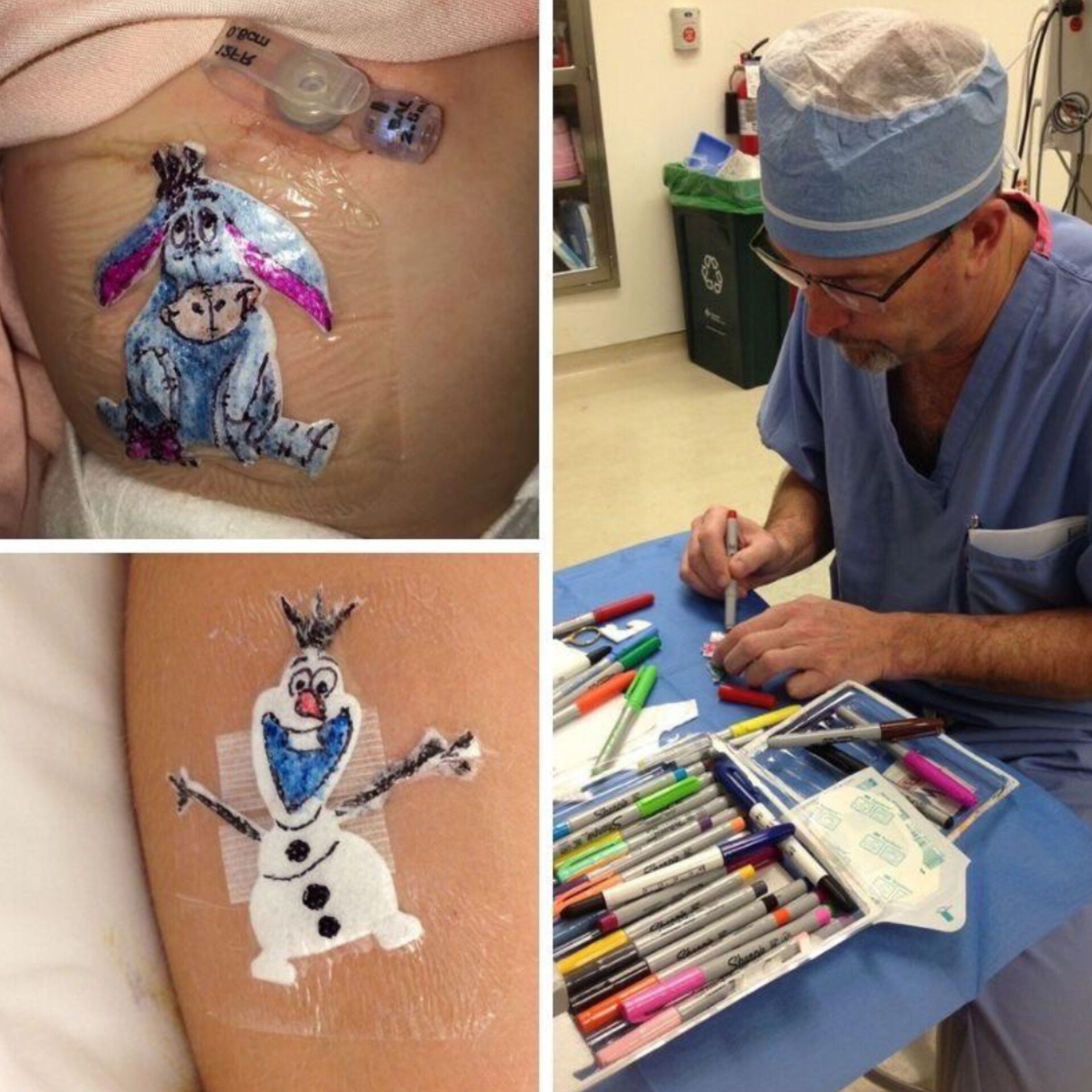
The inspiration for this creative outlet dates back to Parry’s days as a surgical resident. During his training at the National Naval Medical Center in Maryland, he worked under Dr. Perry Stafford. Stafford had a unique habit of cutting bandages into the shapes of sharks to delight his young patients. Parry saw the immediate emotional impact this had on families. He initially adopted the habit by cutting dressings into hearts or sharks, but he eventually realized he could go further. He began carrying a toolkit of nearly 30 colored markers, allowing him to illustrate anything a child could imagine.
Hospital environments are notoriously stressful for pediatric patients, often leading to what psychologists call “medical trauma.” Standard clinical protocols focus heavily on physical recovery, but the emotional transition from surgery to healing is frequently overlooked. Research into pediatric care suggests that distraction and personalization can significantly lower cortisol levels in children. By asking a patient what they want to see on their bandage before they go under, Parry gives them a sense of agency and something to look forward to when they wake up.
The requests vary as much as the children themselves. Parry has drawn everything from classic icons like Snoopy and SpongeBob SquarePants to intricate sports team logos. One notable story involved a young boy named Nicholas Sender in 2017. Nicholas shared a deep bond with his father over exotic cars. Before his surgery, he asked for a Lamborghini. When he finally opened his eyes in recovery, he didn’t ask about his pain or the procedure. He immediately searched for the bandage to see his hand-drawn supercar. His mother noted that the drawing looked exactly like one of his favorite toy cars, providing an instant bridge back to his normal, healthy life.
Public reaction to Parry’s work highlights a growing desire for empathy in the healthcare industry. On social media and parenting forums, thousands of people have shared his story, often comparing his bedside manner to the cold, hurried nature of modern insurance-driven medicine. Many parents have revealed that they don’t just throw these bandages away. They peel them off carefully, preserve them, and place them in scrapbooks. For these families, the ink on a piece of medical gauze represents a moment where a highly skilled specialist saw their child as a person rather than a line item on a surgical schedule.
The logistical effort required for this is minimal, yet the payoff is immense. Parry spends only about five minutes on each drawing once the surgery is complete. His operating room staff has fully embraced the tradition, often standing by with his specific set of pens as he finishes his final stitches. While Parry considers himself a hobbyist artist, he treats the “unusual” requests as a professional challenge. Whether it is a holiday-themed turkey or a specific Disney character in surgical scrubs, the goal is always the same: to make the child feel special.
This story serves as a vital reminder for the medical community at large. As technology and automation continue to dominate the surgical field, the “soft skills” of medicine are becoming more valuable than ever. Dr. Parry’s 10,000 drawings aren’t just doodles; they are a form of psychological aftercare. He proves that while a surgeon’s job is to fix the body, a doctor’s job is to care for the soul. Moving forward, his legacy at Akron Children’s Hospital sets a high bar for how pediatric facilities can integrate joy into the healing process, one marker stroke at a time.