
CORNELL FRAT BROS ALLEGEDLY GANG- RAPED & DRUGGED STUDENT, MESSAGED ‘FREE P***Y’
The pristine image of an Ivy League education often masks a darker, more dangerous reality within fraternity row. A recent lawsuit filed in Manhattan Supreme Court brings this contrast into sharp, painful focus. It describes a night of alleged systematic abuse and chemical impairment that challenges the very safety of university life. While campuses often promise a secure environment for growth, this case suggests that for some, the greatest threat lives just a few doors down.
The incident occurred in October 2024 at the Chi Phi fraternity house near Cornell University. The plaintiff, identified only as Jane Doe, was a 20-year-old student at the time. According to the legal filing, the evening began with alcohol consumption at a local bar. The woman eventually found herself at the Chi Phi residence, where she intended to meet a sorority sister. What happened next is the subject of a civil battle that highlights the intersection of Greek life and alleged predatory behavior.

The lawsuit names seven specific individuals: Matthew Ingalls, Johnathan Newell, Winston Lee, Gillio Lopes, Diego Sarabia, Scott Norris, and Scott Kretzschmar. The core allegations involve the forced use of ketamine, a powerful dissociative anesthetic. The complaint claims that Ingalls and Newell pressured the victim into using the drug. Once she was incapacitated, the situation escalated into a horrific series of sexual assaults. The victim alleges that multiple men participated while she was unconscious.
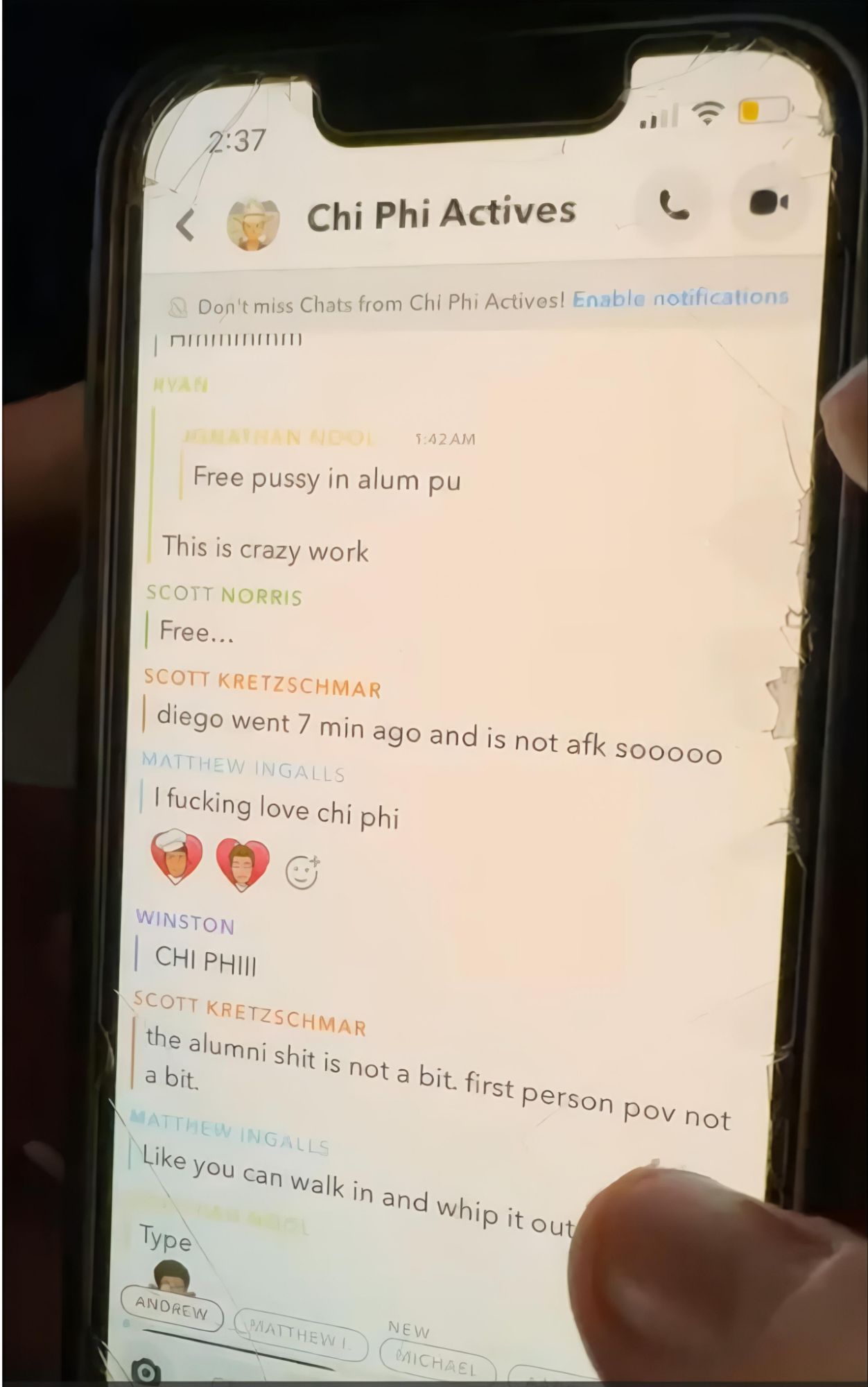
Evidence cited in the lawsuit includes digital trails that paint a callous picture of the evening. The plaintiff claims Johnathan Newell sent messages to a Snapchat group titled “Chi Phi Actives.” In these messages, he allegedly invited other members to the upstairs rooms by using the phrase “free p***y” to describe the unconscious woman. The suit further details disturbing behavior involving the use of narcotics during the assault. It claims one defendant poured ketamine onto himself and forced the victim to ingest it.
This case adds to a long, troubled history of Greek life at major American universities. For decades, fraternities have faced scrutiny for “hazing” rituals and “drugging” incidents. National statistics show that women in sororities are 74% more likely to experience sexual assault than other college students. Despite these numbers, the internal judicial systems of universities often face criticism for being too lenient. In this instance, the plaintiff claims Cornell allowed the men to “mitigate” their actions by writing essays rather than facing immediate, severe expulsion.
Responses to these allegations vary wildly between the legal teams involved. Jeremy Saland, an attorney representing Scott Kretzschmar, issued a firm denial of all claims. He asserts that the defense possesses scientific evidence and statements from the plaintiff that prove his client’s innocence. Saland pointed out that the Ithaca Police Department has not filed criminal charges despite an investigation. He argues that the lack of criminal prosecution proves that the allegations failed to meet even a nominal standard of probable cause.
Public reaction to the lawsuit reflects a growing frustration with how elite institutions handle sexual violence. On social media and campus forums, students expressed outrage at the idea of “essay writing” as a punishment for alleged gang rape. This sentiment mirrors national movements like “End Rape on Campus,” which push for federal oversight of university disciplinary boards. The disparity between the victim’s claim of an ongoing police investigation and the defense’s claim of total exoneration creates a confusing narrative for the public.
The lawsuit seeks damages for severe emotional and psychological distress. It also holds Cornell University accountable, arguing the school failed to protect its students from known risks within the fraternity system. While the defendants maintain their innocence, the details of the “Chi Phi Actives” Snapchat group highlight a culture of digital objectification. Even if criminal charges remain absent, the civil court will now decide if the fraternity and its members are liable for the trauma described in the filing.
This legal battle represents more than just a dispute between individuals. It serves as a referendum on the “work hard, play hard” culture of the Ivy League. When substances like ketamine enter the social scene, the line between a party and a crime scene blurs. The outcome of this case could change how Cornell and similar institutions oversee their Greek organizations. For now, the focus remains on the courtroom, where the truth behind that October night will finally be examined under oath.